How to Build a Budget That Actually Sticks

You’ve tried budgeting before. Maybe a spreadsheet. Maybe an app with 47 categories. Maybe the envelope method.
It worked for a week. Maybe two. Then life happened, you fell behind, and the whole system collapsed.
Sound familiar? You’re not alone. Most budgets fail within 30 days.
But it’s not you — it’s the system. Here’s how to build one that actually sticks.
Why Most Budgets Fail
Top Reasons Budgets Fail
Problem 1: Too Complex
A budget with 40 categories, subcategories, and monthly limits for each one might be thorough — but it’s unsustainable. Every purchase becomes a categorization decision. You spend more time managing the budget than living your life.
The fix: Fewer categories. Ideally, a single number you track daily.
Problem 2: Too Rigid
“$200 for groceries, $100 for dining out, $50 for entertainment…”
Then your friend visits unexpectedly, you overspend on dining by $30, and suddenly the whole system feels broken. You give up.
Real life doesn’t fit neat boxes. Rigid budgets break at first contact with reality.
The fix: One flexible pool for discretionary spending, adjusted daily.
Problem 3: Feedback Is Too Slow
Monthly budgets give you feedback once a month — usually when it’s too late to do anything about it. “Oh, I overspent by $400 in March” doesn’t help you in March.
The fix: Daily awareness. Know what you can spend today, and adjust behavior in real-time.
Problem 4: Requires Willpower
If your budget requires you to resist temptation all day every day, it will fail. Willpower is finite. By the end of a stressful day, that budget doesn’t stand a chance.
The fix: Automate the important parts (savings, bills). Make tracking effortless.
The Anatomy of a Sticky Budget
A budget that sticks has four qualities:
1. Simplicity
If you can’t explain your budget in one sentence, it’s too complex.
Examples of simple budgets:
- “I can spend $45/day on everything except rent and bills.”
- “I save 20%, spend the rest.”
- “Fixed expenses come out automatically; what’s left is mine.”
2. Flexibility
Good budgets flex with life. Overspend Tuesday? Spend less Wednesday. Big expense Friday? Adjust for the rest of the month.
Rigid categories create failure points. Flexible systems absorb shocks.
3. Daily Feedback
You should know your budget status instantly. Not “let me check my spreadsheet” — instant, at-a-glance awareness.
This is why daily budget approaches work better than monthly for most people. The feedback loop is tight enough to actually change behavior.
4. Low Maintenance
A budget that takes 30 seconds to update will get updated. A budget that takes 30 minutes will get abandoned.
Every additional step reduces the chance you’ll stick with it.
Building Your Sticky Budget: Step by Step
Calculate your fixed expenses
Rent, utilities, insurance, debt payments — things that don't change
Decide your savings rate
Pay yourself first — 10%, 20%, whatever you can sustain
Automate both
Set up auto-pay for bills and auto-transfer for savings
Calculate your daily limit
What's left divided by days in the month
Track daily (30 seconds)
One number to check, one update to make
Step 1: Fixed Expenses
List everything that comes out automatically or doesn’t change:
- Rent/mortgage
- Utilities
- Insurance
- Subscriptions
- Debt payments
- Regular bills
Add them up. This is your non-negotiable monthly outflow.
Step 2: Savings Rate
Before you budget for spending, budget for saving. A 20% savings rate is a good target, but start with what you can sustain — even 10% is meaningful.
Calculate Your Daily Budget
Enter your numbers above - results update automatically
Step 3: Automate
Set up automatic transfers for:
- Savings (day after payday)
- Rent/mortgage
- All fixed bills
What’s automated can’t be skipped. What’s left over is genuinely available to spend.
Step 4: Your Daily Number
Take what’s remaining and divide by days in the month. This is your daily spending limit — the one number you need to know.
Example: $1,500 remaining ÷ 30 days = $50/day
That’s your budget. Spend up to $50 today on anything: groceries, coffee, entertainment, whatever. Tomorrow, you get another $50.
Step 5: Track (30 Seconds)
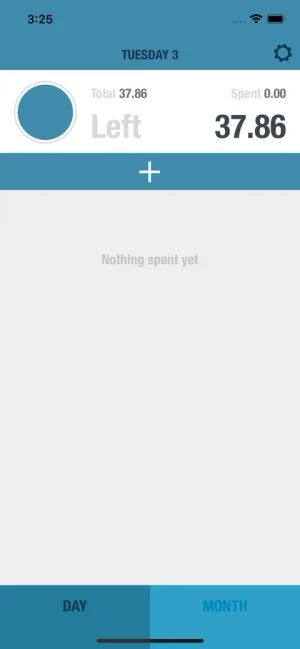
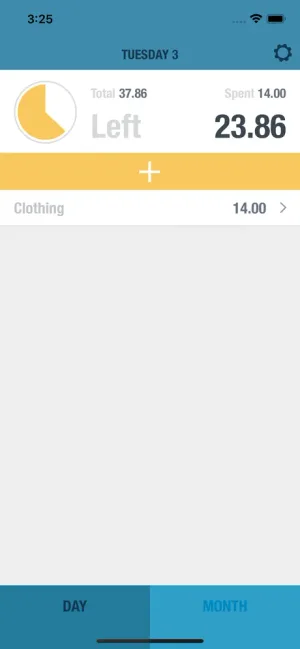
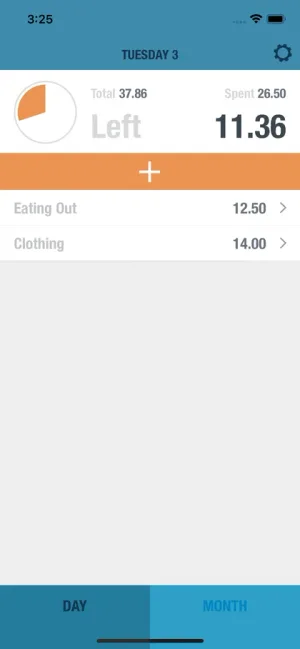
At the end of each day, log what you spent. That’s it.
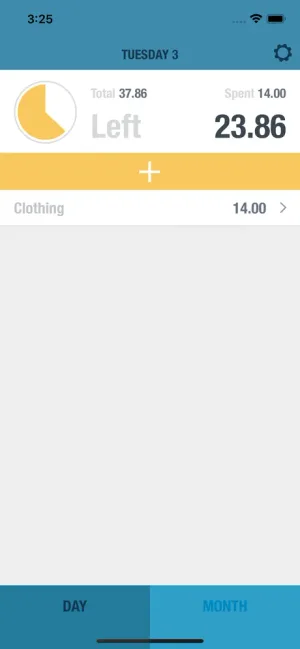
Spent $45? Great, you’re $5 ahead for tomorrow. Spent $70? Tomorrow’s limit is $30 to get back on track.
The system self-corrects. No month-end reckoning, no guilt spirals.
The Habit Loop
A budget that sticks becomes a habit. Here’s how to build that habit:
Cue → Routine → Reward
Cue: A specific trigger that reminds you to budget
- End of day alarm
- Getting into bed
- Brushing teeth (pair with existing habit)
Routine: The 30-second budget action
- Open app
- Log any spending
- See tomorrow’s number
Reward: The psychological payoff
- Green number = satisfaction
- Staying on track = progress visible
- Rolling over extra = bonus for tomorrow
Make It Stupidly Easy
The easier the routine, the more likely it sticks:
- One tap to open
- Minimal data entry
- No categorization required
- Done in 30 seconds
Every additional step reduces compliance.
Start Smaller Than You Think
Don’t try to revolutionize your finances on day one. Start with just tracking:
- Week 1: Just log spending (don’t try to limit it)
- Week 2: Set a loose daily target
- Week 3: Tighten the target if comfortable
- Week 4: Now it’s a habit
By the time you’re actually budgeting strictly, the tracking habit is already automatic.
Handling Irregular Expenses
The daily budget works for daily spending. But what about the $800 car insurance bill every six months? The $200 birthday gift?
Option 1: Sinking Funds
Set aside money monthly for irregular expenses:
- Car insurance: $133/month
- Gifts: $50/month
- Car maintenance: $100/month
These come out of your fixed expenses, not your daily budget.
Option 2: Absorb Over Time
When a big expense hits, spread it across your remaining days:
- $200 expense hits on day 15 of the month
- 15 days remaining
- Add $13.33/day to your limit for those days
- Or reduce limit by $13.33 for the remaining days
The daily system flexes to accommodate.
What If You Fall Off?
You will have bad days. Bad weeks, even. The budget-that-sticks isn’t about perfection — it’s about quick recovery.
The Reset Mentality
Every day is a new day. Yesterday’s overspending doesn’t mean today is ruined. Your daily limit adjusts, and you move forward.
Monthly Resets
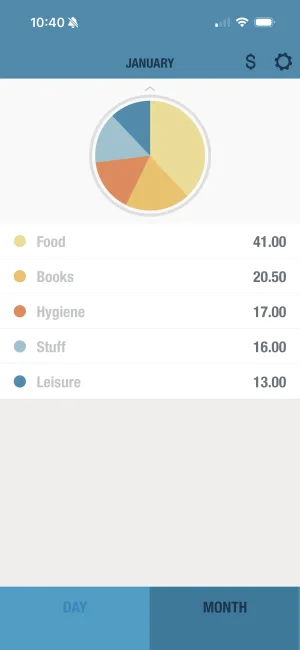
Every month starts fresh. December was a disaster? January is a clean slate. The psychological burden of accumulated failure is eliminated.
Grace Over Guilt
Guilt kills budgets. If you beat yourself up every time you overspend, you’ll associate budgeting with pain and quit.
Instead: “Okay, that happened. What’s my number for tomorrow?”
Move forward. Always forward.
The Minimum Viable Budget
If all else fails, here’s the simplest possible budget:
- Automate savings (any percentage)
- Auto-pay all bills
- Know one number: what you can spend today
- Log it at night (30 seconds)
That’s it. No categories. No spreadsheets. No 2-hour monthly reviews.
Just: Can I spend this? If yes, spend. If no, wait.
Why This Works
The daily budget approach works because it aligns with how humans actually behave:
Short feedback loops: You know immediately if you’re on track, not 30 days later.
Small decisions: $50 today feels manageable. $1,500/month feels abstract.
Built-in flexibility: Bad day? Adjust tomorrow. No system collapse.
Low cognitive load: One number, not forty categories.
Progress visible: Every green day is a win. Motivation compounds.
Start Today
You don’t need a new month. You don’t need January 1st. You can start right now.
- Calculate what you can spend today
- Log what you spend tonight
- Check your number tomorrow
- Repeat
The budget that sticks isn’t the most sophisticated one. It’s the simplest one you’ll actually use.
What’s your number today?
Frequently Asked Questions
Why do most budgets fail?
Most budgets fail because they're too complex, too rigid, or require too much willpower. A 40-category spreadsheet that takes an hour to maintain won't last. Successful budgets are simple, flexible, and give you quick daily feedback.
How long does it take for a budget to become habit?
Research suggests 21-66 days for habit formation. For budgeting, aim for 30 days of consistent tracking. The key is making it so easy that it requires almost no willpower. Daily 30-second check-ins beat weekly hour-long spreadsheet sessions.
Should I budget monthly or daily?
Daily budget awareness works better for most people. Monthly budgets often fail because the feedback comes too late — you don't realize you've overspent until the month is over. Daily limits give you real-time awareness to adjust behavior immediately.
Related Articles



Ready to take control of your budget?
Download BUDGT and start tracking your daily spending today.