Coast FIRE Explained: When You Can Stop Saving for Retirement

Imagine knowing that your retirement is already handled — not because you have enough to retire today, but because the money you’ve already saved will grow to cover retirement by the time you get there.
That’s Coast FIRE.
Coast FIRE (also called Coast FI) is a milestone in the financial independence journey where you’ve saved enough that compound growth alone will get you to your retirement number. You don’t need to save another dollar for retirement. You just need to earn enough to cover your current living expenses.
This freedom changes everything. You can take a lower-paying job you actually enjoy. Work part-time. Start a business without the financial pressure. Move somewhere cheaper. The retirement savings pressure is off — permanently.
What is Coast FIRE?
Coast FIRE is when your current investments, without any additional contributions, will grow to support your retirement by your target retirement age.
The key insight is the power of compound growth over time. If you save aggressively early in life, your money has decades to grow. At some point, that growth trajectory guarantees you’ll hit your retirement number without adding another dollar.
Once you reach Coast FIRE, your financial life splits in two:
-
Retirement is handled. Your existing investments will compound to your FIRE number by retirement age. No more contributions needed.
-
You still need income. You need to cover your current living expenses until retirement. But you don’t need to save for retirement anymore.
This creates remarkable flexibility. Your income only needs to cover today’s expenses — not tomorrow’s retirement. That might mean a 50% pay cut is suddenly viable if it means a job you love. Or working 20 hours instead of 50. Or taking a year off to travel while doing occasional freelance work.
The Math Behind Coast FIRE
Coast FIRE calculations rest on three numbers:
1. Your FIRE Number — How much you need to retire
This is your annual retirement spending divided by your safe withdrawal rate:
FIRE Number = Annual Retirement Spending ÷ Safe Withdrawal RateIf you plan to spend $40,000/year in retirement and use the 4% rule: $40,000 ÷ 0.04 = $1,000,000
2. Your Real Return — Investment growth minus inflation
Real Return = Investment Return - Inflation RateIf you expect 7% returns and 3% inflation: 7% - 3% = 4% real return
3. Your Coast FIRE Number — What you need now to coast
Coast Number = FIRE Number ÷ (1 + Real Return)^Years to RetirementIf you need $1,000,000 to retire, expect 4% real returns, and have 30 years until retirement: $1,000,000 ÷ (1.04)^30 = $308,000
That’s it. If you have $308,000 invested today at age 30, you can stop contributing and still have $1,000,000 by age 60.
Coast FIRE Numbers by Age (for $40K retirement spending at age 60)
Notice how time is the key variable. A 25-year-old needs $253,000 to coast. A 45-year-old needs $555,000 — more than double. The earlier you reach Coast FIRE, the lower the number.
Have You Already Reached Coast FIRE?
Many people are closer to Coast FIRE than they realize.
If you’ve been consistently saving in a 401(k) or IRA since your 20s, you might already be there. The combination of employer matches, tax-advantaged growth, and consistent contributions adds up faster than most people track.
Here’s a quick check: Take your current invested assets and compare them to your coast number. If you’re at or above it, congratulations — you’ve reached Coast FIRE.
If you’re close but not quite there, you have options:
- Keep saving at your current rate until you cross the threshold
- Reduce your projected retirement spending (which lowers your FIRE number and therefore your coast number)
- Plan for a slightly later retirement age (which gives your money more time to grow)
The gap between “close to Coast FIRE” and “at Coast FIRE” might only be a year or two of continued saving.
What Changes Once You Reach Coast FIRE
Reaching Coast FIRE unlocks freedom that most people don’t experience until traditional retirement age.
Career Flexibility
Your job no longer needs to maximize income. It only needs to cover current expenses. This opens up possibilities that seemed impossible before:
- Take the lower-paying job you’d actually enjoy
- Go part-time and reclaim your time
- Start a business or freelance without the financial pressure
- Take career risks (start a new field, go back to school) without retirement anxiety
- Say no to the promotion that comes with 60-hour weeks
Location Freedom
If you can work remotely or in any location, you can move somewhere with lower living expenses. A lower cost of living means you need less income to cover expenses, making the coast lifestyle even easier.
Some Coast FIRE folks move abroad, leveraging geographic arbitrage to stretch their coast income further.
Time Abundance
Without the need to maximize savings, you can optimize for time instead of money. Work 30 hours instead of 50. Take more vacation. Spend time on hobbies, family, or passion projects that don’t pay well but matter to you.
Psychological Relief
Perhaps the most underrated benefit: the weight lifts. The constant mental math of “am I saving enough?” disappears. Retirement is handled. Your investments will do their job. You can breathe.
Coast FIRE Lifestyle: Working for Expenses Only
Once coasting, your financial life simplifies dramatically. You’re no longer balancing income, savings rate, and expenses. You’re just balancing income against expenses.
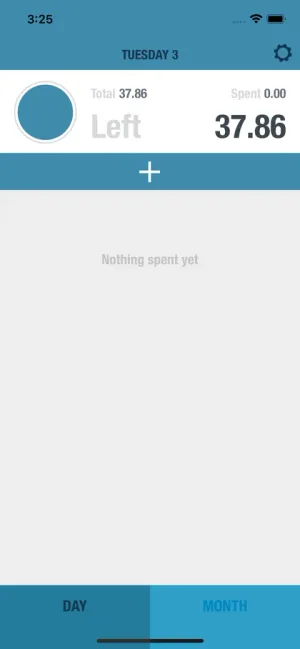
Your daily budget question becomes: “Can my coast job cover my current living costs?”
Your Coast FIRE Daily Budget
Enter your numbers above - results update automatically
If your monthly expenses are $3,000, that’s $100/day. Any job or combination of income sources that covers $3,000/month works.
Popular “coast careers” include:
- Part-time work in your current field — Consulting, contract work, or reduced hours
- Barista FIRE — Working at a coffee shop or retail for benefits (especially healthcare in the US)
- Seasonal work — Tourism, tax prep, holiday retail
- Teaching or tutoring — Sharing your expertise
- Freelancing — Writing, design, programming at your own pace
- Passion projects — Turning hobbies into side income
The name “Barista FIRE” comes from the idea of working at Starbucks for healthcare benefits while your investments grow. It’s essentially the same concept as Coast FIRE, just with different emphasis.
Risks and Considerations
Coast FIRE isn’t risk-free. Understanding the potential downsides helps you plan appropriately.
Sequence of Returns Risk
If markets drop significantly early in your coast period, your investments may not recover in time. This is the same sequence-of-returns risk that affects early retirement, but you have less ability to adjust (since you’re not adding new contributions).
Mitigation: Build a buffer above your exact coast number. Instead of coasting the moment you hit $308,000, wait until you have $350,000 or more.
Healthcare Costs (US-Specific)
If you leave employer coverage before age 65 (Medicare eligibility), you’ll need to cover healthcare yourself. ACA marketplace plans can work, but costs vary significantly by state and income.
Some people specifically choose “Barista FIRE” jobs that offer health benefits, like Starbucks (which offers coverage to part-time employees).
Lifestyle Creep
Without the pressure of aggressive saving, some people gradually increase expenses. When you’re no longer tracking a savings rate, it’s easy for spending to drift upward.
Daily budget tracking helps here. Even in Coast FIRE, staying aware of your spending prevents lifestyle inflation from eating into your coast cushion.
Staying Invested
Market volatility can be psychologically challenging when you’re not adding new money. Watching your portfolio drop 20% feels different when contributions aren’t lowering your average cost.
The same long-term perspective applies: stay invested, stay diversified, and remember that your timeline extends to retirement — not just today.
Coast FIRE vs Other FIRE Variants
The FIRE community has developed several variations, each with different trade-offs:
| Type | Definition | Trade-off |
|---|---|---|
| Regular FIRE | Have enough to retire now with moderate spending | Requires saving until full FIRE number |
| Lean FIRE | Retire now with minimal spending (~$40K or less) | Very frugal lifestyle required in retirement |
| Fat FIRE | Retire now with high spending ($100K+) | Requires much larger portfolio |
| Barista FIRE | Partially retired, working part-time for benefits | Still need some income, but less pressure |
| Coast FIRE | Let investments grow, work for current expenses only | Still working, but without savings pressure |
Coast FIRE is unique because you’re not retiring yet — you’re removing the retirement savings requirement while continuing to work. It’s a bridge between aggressive saving and full retirement.
Calculate Your Coast FIRE Number
Ready to find out where you stand?
Use our Coast FIRE Calculator to:
- See your exact coast number based on your target retirement
- Visualize when your current trajectory crosses the coast threshold
- Adjust assumptions (returns, inflation, withdrawal rate) to see different scenarios
Making Coast FIRE Work
If Coast FIRE appeals to you, here’s how to approach it:
1. Calculate your number. Use our calculator to find your coast FIRE target. Know exactly what you’re aiming for.
2. Build a buffer. Don’t coast the instant you hit the number. A 10-20% buffer protects against sequence of returns risk and gives you psychological cushion.
3. Plan your coast income. Before transitioning, know how you’ll cover expenses. Test the waters — try part-time work or freelancing while still employed.
4. Track your spending. Even in Coast FIRE, daily awareness prevents lifestyle creep. A simple daily budget keeps you honest about your actual expenses.
5. Stay invested. The math only works if your investments continue growing. Don’t let market volatility scare you into cash.
Coast FIRE offers something rare: freedom before traditional retirement age without requiring a massive portfolio. It’s not for everyone — some people love their high-paying careers. But for those feeling trapped by the savings treadmill, it’s a legitimate path to a more intentional life.
Your investments can handle retirement. The question is: what will you do with the freedom?
Frequently Asked Questions
What is Coast FIRE?
Coast FIRE is when you've saved enough that your investments will grow to cover retirement without additional contributions. You can 'coast' — work just enough to cover current expenses while your portfolio compounds.
How do I calculate my Coast FIRE number?
Coast FIRE Number = FIRE Number / (1 + Real Return)^Years Until Retirement. For example, if you need $1M to retire at 60, you're 30, and expect 4% real returns, your coast number is $1M / (1.04)^30 = $308,000.
What's the difference between Coast FIRE and regular FIRE?
Regular FIRE means you have enough to retire now. Coast FIRE means you have enough invested that it will grow to your retirement number — you just need to cover current expenses until then.
Can I still contribute after reaching Coast FIRE?
Yes, but you don't have to. Any additional savings will either let you retire earlier or with more money. Many people in Coast FIRE redirect their former savings to experiences, travel, or passion projects.
What jobs work well for Coast FIRE?
Any job that covers your current expenses without the stress of maximizing income: barista, part-time consulting, seasonal work, teaching, or freelancing in your field at reduced hours.
How does inflation affect Coast FIRE?
You should use real returns (investment return minus inflation) in your calculation. Our calculator uses 7% returns - 3% inflation = 4% real returns by default.
Related Articles



Ready to take control of your budget?
Download BUDGT and start tracking your daily spending today.