The Daily Budget Method: A Simple Spending System for FIRE

I’ve tried every budgeting system.
YNAB with its envelopes and rules. Spreadsheets with 40 categories and formulas. Zero-based budgeting where every dollar gets assigned. Each system promised control over my money, and each system lasted about three months before I abandoned it.
The problem wasn’t discipline. The problem was complexity. Real life doesn’t fit neatly into budget categories. That grocery trip that included toiletries and birthday candles — three categories in one receipt. The restaurant dinner that was half date night, half celebrating a work win — which envelope does that come from?
Then I found the daily budget method. One number. One question. A system so simple it actually survives contact with reality.
The Core Concept
The daily budget method reduces all budgeting complexity to a single number: what you can spend today.
Not what you should spend on groceries this month. Not how much is left in your dining envelope. Not whether you’re 67% through your entertainment allocation. Just one number.
“Can I spend this today?”
If the answer is yes — if this purchase keeps you under your daily limit — you’re on track. If the answer is no, you either skip the purchase or accept that tomorrow’s limit will be lower.
That’s the entire system.
The Math
Calculating your daily budget takes about 60 seconds:
Calculate Your Daily Budget
Enter your numbers above - results update automatically
For example:
- Monthly income: $6,000
- Fixed expenses: $2,000
- Savings goal (50%): $3,000
- Available: $1,000
- Daily budget: $33
Your magic number is $33. Stay under it on average, and you automatically hit your 50% savings rate.
Why Simplicity Works
Complex budgeting systems fail for predictable reasons:
Category confusion. Is a coffee shop visit “dining out” or “entertainment”? Does the drugstore receipt split between “health” and “household”? These decisions create friction that accumulates until you stop bothering.
Envelope shuffling. When you overspend in one category, you have to decide which other category to raid. More decisions. More friction. More reasons to quit.
Delayed feedback. Most systems tell you how you did at month-end. By then, it’s too late to change anything. You overspent; the month is over.
Guilt spirals. Miss a week of tracking? Now you’re behind. Blow a category budget? Now you feel like a failure. Complex systems create more opportunities for perceived failure.
The daily budget method sidesteps all of this. One number. Real-time feedback. No categories to manage. Nothing to feel guilty about — just adjust tomorrow.
The Daily Budget in Practice
Here’s what using this method actually looks like:
Check your daily budget
Morning glance: you have $45 to spend today. Yesterday you underspent, so you have a small buffer.
Make spending decisions
Throughout the day, you check purchases against your limit. $12 lunch? That leaves $33. Quick mental math, no app required.
Log expenses
As you spend, log the amount. Takes 10 seconds per expense. Running total updates automatically.
End of day check
Did you stay under? Green means yes. Tomorrow starts fresh. Over? Your limit adjusts down slightly.
Repeat
Same simple system, every day. No weekly reviews, no monthly reconciliation. Just daily awareness.
The entire daily investment is maybe 5 minutes. Check your number. Make decisions. Log expenses. Done.
The Self-Correcting System
One of the most powerful features of daily budgeting is automatic adjustment.
Traditional budgets treat each category as fixed. Overspend on dining, and you’ve “failed” that category for the month. The daily budget method doesn’t work this way.
Overspend today? Tomorrow’s limit decreases slightly. The system automatically compensates to keep you on track for your monthly goal.
Underspend today? Tomorrow’s limit increases. You’ve earned flexibility.
This creates a self-correcting feedback loop. A splurge on Monday doesn’t derail your month — it just means tighter limits later in the week. No guilt. No failure. Just adjustment.
The Color System
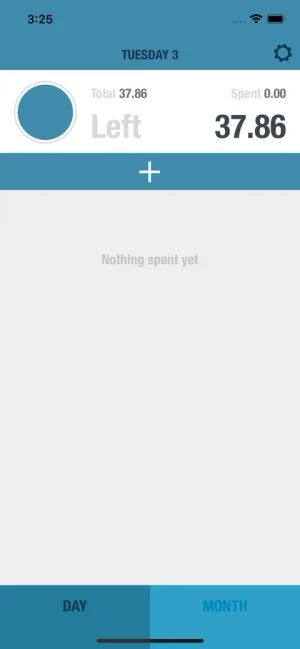
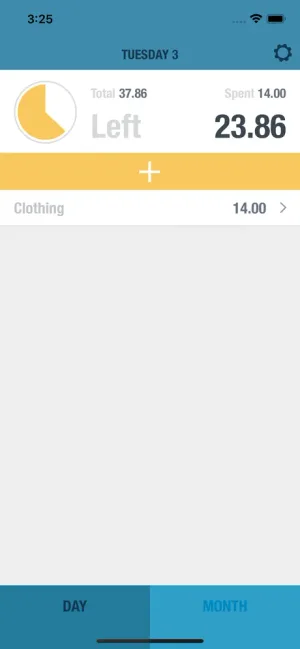
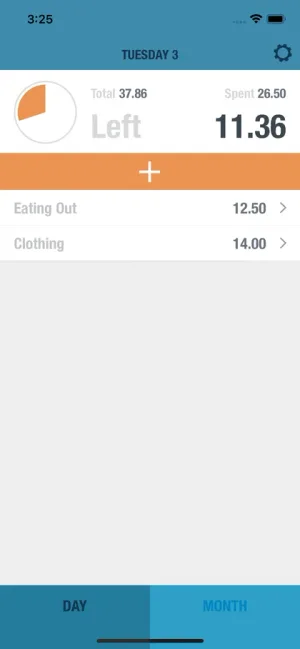
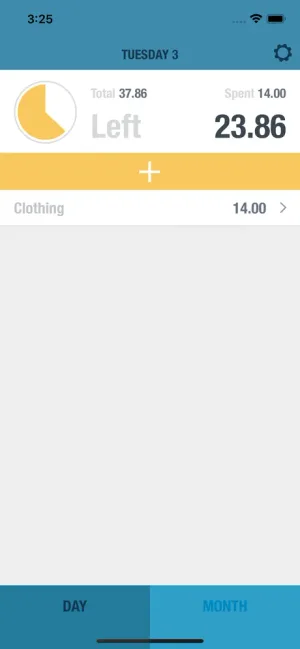
Visual feedback accelerates awareness. Instead of checking numbers, you check colors:
Blue — You’re on track. Plenty of budget remaining for today.
Yellow — Caution. You’ve used a significant portion of today’s budget.
Orange — Slow down. Most of today’s budget is spent.
Red — Stop. You’ve exceeded today’s limit.
This traffic light system lets you check status in half a second. No mental math required. Glance, see color, make decision.
Handling Edge Cases
“But what about…” is the natural response to any simple system. Here’s how the daily budget method handles common edge cases:
Irregular Expenses
Annual insurance premium? Car registration? Holiday gifts? These lumpy expenses can blow up a daily budget if you’re not prepared.
Solution: Include a monthly allocation for irregular expenses in your fixed costs. $1,200 annual car insurance becomes $100/month in fixed expenses. When the bill comes, it’s already accounted for.
Alternatively, underspend for a few weeks before big irregular expenses. Your accumulated buffer covers the spike.
Weekday vs Weekend Spending
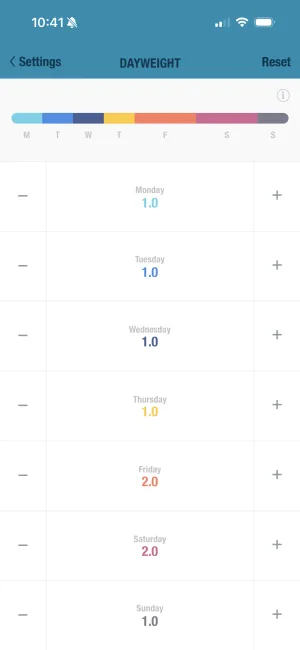
Most people spend more on weekends. Friday dinner, Saturday activities, Sunday brunch. A flat daily budget can feel restrictive.
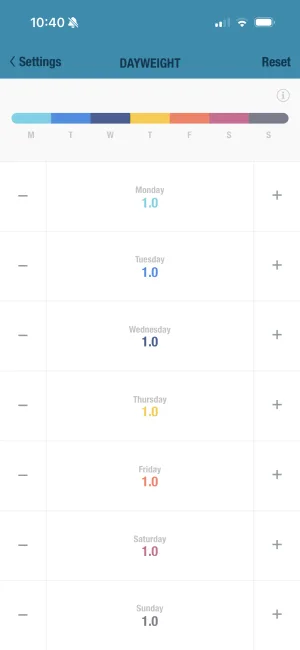
Solution: Day weights. Allocate less to weekdays (when you’re busy working anyway) and more to weekends. Same monthly total, distributed to match your actual spending patterns.
Large Single Purchases
A $300 appliance doesn’t fit in a $50 daily budget. Does that mean you can never buy anything over your daily limit?
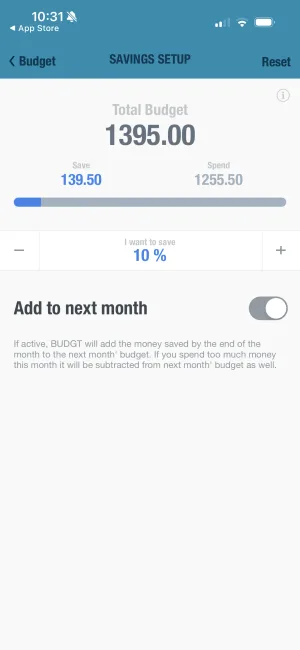
Solution: Month overflow. When you underspend, the surplus carries forward. After a week of spending $40/day on a $50 budget, you have $70 of accumulated flexibility. Use it for larger purchases without breaking the system.
Travel
Different cities, different currencies, different spending patterns. Travel throws off any budget system.
Solution: Travel mode. Set a separate daily budget for travel that reflects trip costs. Track in the local currency. When you return, switch back to normal mode.
Why FIRE and Daily Budgets Fit
The FIRE community has particular needs that daily budgeting addresses:
High savings rates. When you’re saving 50-70% of your income, there’s less margin for error. Daily feedback catches overspending immediately, not at month-end.
Behavior change focus. FIRE isn’t just about math — it’s about building sustainable habits. Daily budgeting creates daily awareness, reinforcing frugal behavior constantly.
Simplicity preference. FIRE folks tend toward minimalism. A system that requires 5 minutes daily beats one that requires weekly reconciliation and category management.
Long time horizons. You’ll be budgeting for years, maybe decades, on the path to FI. Simple systems survive long-term use; complex ones burn out.
Getting Started in 5 Minutes
Ready to try daily budgeting? Here’s the quick start:
Calculate your daily budget
Monthly income minus fixed expenses minus savings goal, divided by 30. That's your number.
Set up tracking
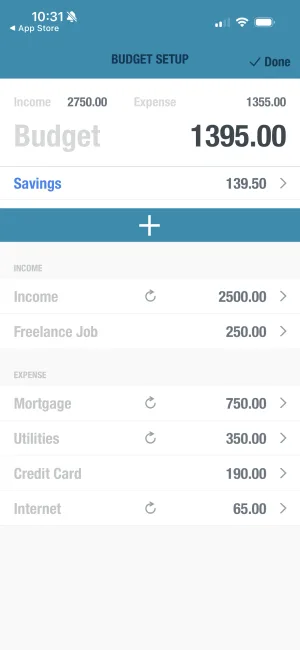
Use BUDGT or any simple app. Enter your monthly income, fixed expenses, and savings rate. It calculates daily budget automatically.
Start logging
Log every expense as it happens. Amount and optional category. 10 seconds per entry.
Check colors
Glance at your daily status before purchases. Green/blue means proceed. Yellow means think. Orange/red means stop.
Adjust and continue
Overspend one day? Limit adjusts tomorrow. No guilt, no failure. Just daily awareness.

The Simplicity Advantage
Budgeting systems fail when they require more effort than their benefit. Envelope budgeting works until you’re tired of shuffling allocations. Spreadsheets work until you skip a week and fall behind.
The daily budget method succeeds because it asks so little:
- One number to remember
- One question to ask
- A few seconds to log each expense
- A glance to check status
That’s a system simple enough to sustain for years. Simple enough to survive busy weeks and stressful months. Simple enough to actually work.
Your path to financial independence will take years. The budgeting system that gets you there needs to survive the journey. Complex systems break down. Simple systems persist.
One number. One question. Financial independence, one day at a time.
Frequently Asked Questions
What is the daily budget method?
The daily budget method reduces budgeting to one number: what you can spend today. Instead of tracking categories or allocating envelopes, you simply stay under your daily limit. If you do, you automatically hit your savings goals.
How is this different from other budgeting systems?
Most systems require categorizing every expense and managing multiple allocations. The daily budget method ignores categories. One number, one question: 'Am I under my daily limit?' That's it.
What if I have a big expense that exceeds my daily budget?
Save up by underspending on other days, or use month overflow to carry forward unused budget. A $200 purchase doesn't break the system — it just means spending less on other days that month.
Do I need to track categories at all?
Not to make the system work. Categories are optional for those who want insight into spending patterns. But the core system only needs total daily spending, not breakdowns.
How long does daily budgeting take?
About 30 seconds per expense to log, plus a quick daily check of your remaining budget. Most people spend 5-10 minutes total per day, often less. The system is designed for minimal time investment.
Related Articles


Ready to take control of your budget?
Download BUDGT and start tracking your daily spending today.