How a Daily Budget Supercharges Your Savings Rate
The FIRE community is obsessed with savings rate — and for good reason. Your savings rate determines how quickly you reach financial independence more than any other factor. Save 50% and you can retire in about 17 years. Save 70% and you’re looking at 8-9 years.
But here’s the problem: most people track their savings rate monthly. They add up expenses at month-end, calculate what’s left, and hope they hit their target.
By then, it’s too late to change anything.
Why Monthly Budgets Fail Your Savings Rate
Monthly budgets have a fatal flaw: delayed feedback.
You don’t know you’ve overspent until the month is already over. That $200 dinner, the impulse Amazon order, the “small” subscription you forgot about — you only see their impact when you’re reviewing last month’s numbers.
At that point, the damage is done. Your savings rate for that month is locked in. All you can do is promise to do better next month.
There’s also a psychological problem with monthly numbers. “$1,800 available for spending” doesn’t trigger the same pause before a purchase as a smaller number would. Large budgets feel abstract. They don’t create the friction that changes behavior.
When You Discover You're Over Budget
With a monthly budget, you might not realize you’ve overspent for 30 days. With a daily budget, you know within 24 hours — usually before you even make the purchase.
The Daily Budget Solution
A daily budget flips the script. Instead of tracking where your money went, you know what you can spend today while still hitting your savings target.
One number. Updated in real time. If you stay under it, you’re automatically hitting your savings rate.
The math is simple:
Calculate Your FIRE Daily Budget
Enter your numbers above - results update automatically
Let’s work through an example:
- Annual income: $80,000 after tax
- Monthly income: $6,667
- Fixed expenses: $2,000 (rent, utilities, insurance)
- Savings target (50%): $3,333
- Available for spending: $1,334
- Daily budget: $44
That’s it. Spend under $44 per day, and you’re saving 50% of your income. No spreadsheet gymnastics. No end-of-month calculations. Just one number to stay under.
The Psychology of Small Daily Numbers
Here’s why daily budgets work better than monthly ones: small numbers create friction.
“Can I afford this $15 lunch?” becomes an instant calculation when your daily budget is $44. You immediately know: yes, but it’s using a third of today’s budget.
Compare that to monthly thinking: “Is $15 okay when I have $1,334 to spend this month?” The answer feels like an obvious yes — it’s barely 1% of your budget. No friction. No pause.
But 30 of those “barely 1%” decisions add up to 30% of your monthly budget gone on lunches alone.
Small daily numbers create a natural pause before purchases. They make the trade-off visible. “$15 means I have $29 left today” hits different than “$15 means I have $1,319 left this month.”
Research backs this up. When people see spending in smaller, more immediate terms, they make more deliberate choices. It’s the same reason paying cash feels more “real” than swiping a card — smaller, tangible numbers engage our loss aversion in a way that abstract large numbers don’t.
How BUDGT Automates This
You could track your daily budget manually. But why would you?
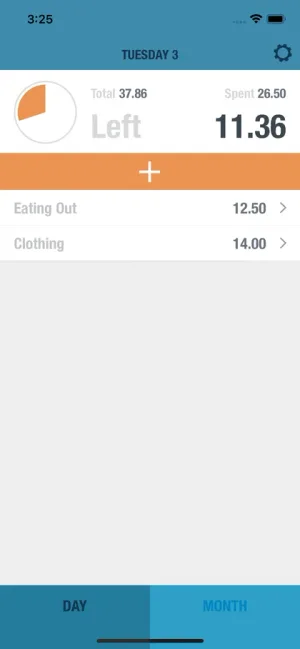
BUDGT calculates your daily budget automatically. Set your monthly income, fixed expenses, and savings target once. The app does the math and shows you one number: what you can spend today.
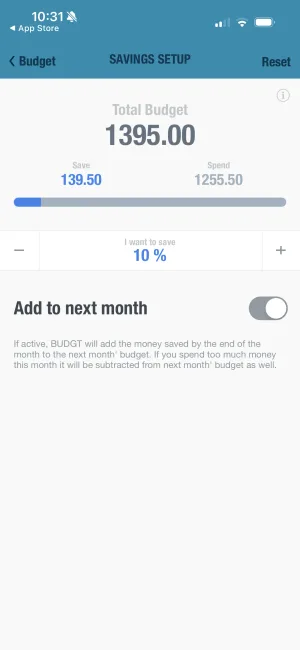
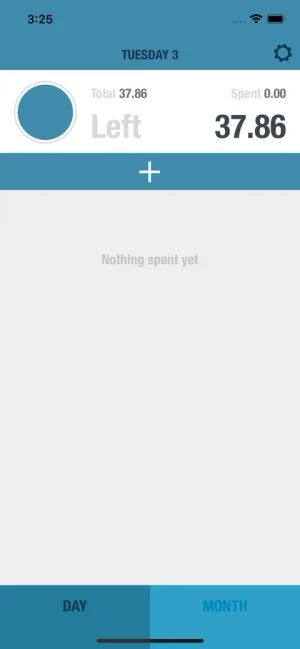
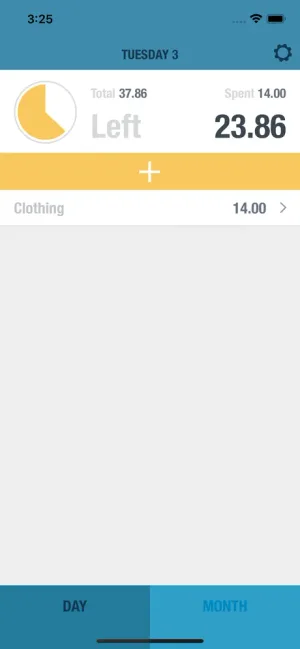
As you log expenses throughout the day, your remaining budget updates in real time. Green means you’re on track. Yellow means caution. Orange means slow down. Red means stop.
No mental math. No end-of-day calculations. Just a color that tells you where you stand.
The Self-Correcting System
One of the most powerful features of daily budgeting is automatic adjustment.
Overspend today? Tomorrow’s limit decreases slightly to compensate. Underspend? Tomorrow you have more flexibility.
This creates a self-correcting system that keeps you on track for your monthly savings goal without requiring constant manual adjustments. A splurge on Monday doesn’t derail your whole month — it just means tighter limits for the rest of the week.
This psychological safety net is important. Traditional budgets treat overspending as failure. Daily budgets treat it as information — a signal to adjust tomorrow, not a reason to give up.
Making It Work with Variable Expenses
“But what about irregular expenses?”
Fair question. Not everything fits neatly into daily spending. Annual insurance premiums, car registration, holiday gifts — these lumpy expenses can blow up a daily budget if you’re not prepared.
The solution: include a monthly amount for irregular expenses in your fixed costs. If you spend $1,200/year on car insurance, add $100/month to your fixed expenses. When the bill comes, you’ve already accounted for it.
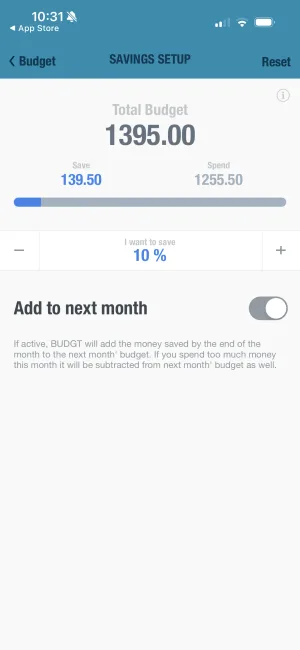
BUDGT also offers day weights — spend less on weekdays when you’re busy, more on weekends when you’re out. And month overflow carries unused budget forward, building a buffer for larger purchases.
Your Savings Rate, One Day at a Time
The path to financial independence isn’t built in monthly chunks. It’s built one day at a time, one purchase at a time, one decision at a time.
A daily budget gives you visibility into each of those decisions. It transforms your savings rate from an abstract goal into a concrete daily practice.
You don’t need complex spreadsheets or 47 spending categories. You need one number: what you can spend today while staying on track for financial independence.
Know your number. Stay under it. Watch your savings rate take care of itself.
Frequently Asked Questions
How does a daily budget affect my savings rate?
A daily budget gives you real-time feedback on spending. If you stay under your daily limit, you're automatically hitting your savings rate target — no end-of-month surprises.
What daily budget do I need for a 50% savings rate?
It depends on your income and fixed expenses. Use our FIRE Daily Budget Calculator to find your exact number. For example, on $80K income with $2,000 fixed expenses, a 50% savings rate gives you roughly $44/day.
Is daily budgeting better than monthly for FIRE?
Daily budgeting provides faster feedback. Monthly budgets tell you that you overspent after it's too late. Daily budgets tell you before each purchase whether you're on track.
How do I calculate my FIRE daily budget?
Take your monthly income, subtract fixed expenses, subtract your savings target, then divide by days in the month. BUDGT does this automatically with Savings Mode.
What if I go over my daily budget one day?
Your daily budget adjusts automatically. If you overspend today, tomorrow's limit decreases to keep you on track for your monthly savings goal. It's self-correcting.
Related Articles



Ready to take control of your budget?
Download BUDGT and start tracking your daily spending today.