How Much Should You Spend on Groceries in 2026? Budget by Household Size
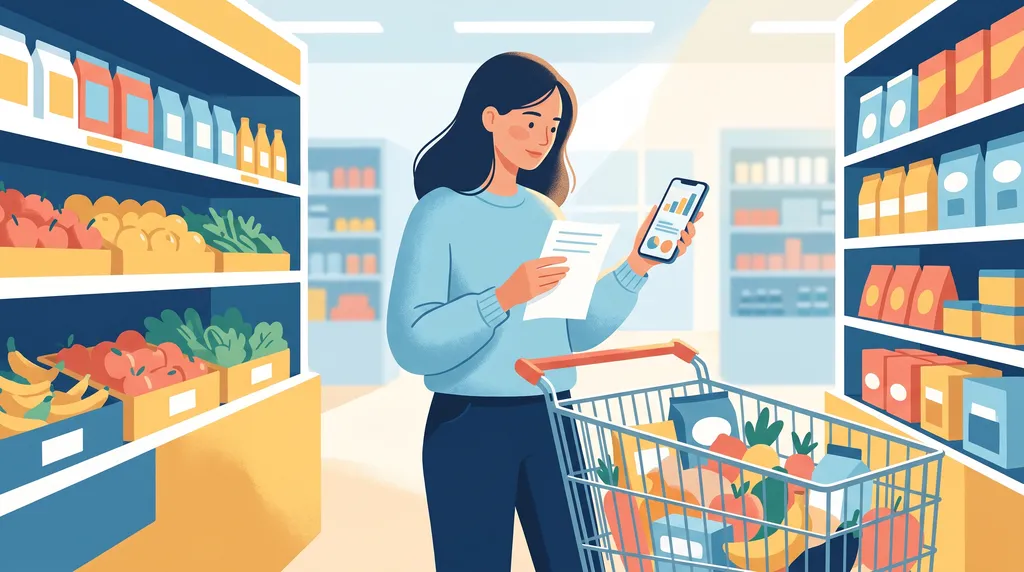
“How much should I be spending on groceries?” is one of the most common — and most frustrating — money questions, because the honest answer is “it depends.” It depends on how many people you’re feeding, how old they are, where you live, and how much you cook at home. But “it depends” isn’t very useful when you’re standing in the cereal aisle trying to figure out if you’re overspending.
So let’s turn it into real numbers. Below is a practical 2026 breakdown of what households actually spend on groceries by size and income, plus a simple way to set the right target for your household — not a stranger’s.
The Quick Answer
If you want a single rule of thumb: aim to spend 10–12% of your take-home pay on groceries. For most households that lands in a sensible range, and it scales naturally with your income.
But percentage alone misses something important — a single person earning $60K shouldn’t spend the same on groceries as a family of four earning $60K. That’s why the most useful approach combines two anchors: your household size (how many mouths, and how old) and your income (what you can actually afford). We’ll look at both.
Grocery Budget by Household Size
Here’s a realistic 2026 picture of monthly grocery spending by household, drawing on USDA food-plan ranges and typical household budgets. The lower end reflects careful, cook-at-home budgeting; the higher end a more comfortable, moderate plan.
| Household | Budget-focused | Moderate plan |
|---|---|---|
| 1 person | $300–400 | $400–550 |
| Couple (2 adults) | $550–700 | $750–950 |
| Family of 3 (2 adults + young child) | $700–900 | $950–1,200 |
| Family of 4 (2 adults + 2 kids) | $900–1,100 | $1,200–1,500 |
| Family of 5+ | $1,100–1,400 | $1,500–1,900 |
A few things worth knowing about these ranges:
- Kids’ ages matter a lot. Toddlers eat little; teenagers can eat as much as adults (sometimes more). A family of four with two teens will sit near the top of the range, while one with two toddlers lands near the bottom.
- “Groceries” means food and household basics — the food you cook and eat at home, plus staples like cleaning supplies and toiletries if you count them here. It does not include restaurants and takeout, which belong in a separate “dining out” line.
- These are national ranges. Your local prices could push you 20–30% higher (major coastal cities) or lower (much of the Midwest and South).
The Percentage Check
Once you have a dollar figure in mind, sanity-check it against your income. Groceries typically sit at 10–12% of take-home pay, inside the broader food budget. If yours is creeping past 15%, that’s not a failure — but it is a signal worth noticing. It usually points to one of three things: shopping habits worth tightening, a high cost-of-living area where you’ll need to rebalance other categories, or simply a bigger household than the percentage assumes.
The percentage and the household-size numbers work together. If they roughly agree, you’ve got a solid target. If they’re far apart — say, the household-size range says $1,000 but 12% of your income is only $600 — that gap is telling you something real about how tight groceries are relative to your budget, and it’s better to see it clearly than to keep guessing.
Calculate Your Grocery Budget
Rather than use anyone else’s number, build your own. Enter your monthly take-home pay to see what a 12% grocery budget looks like for you, broken down to a weekly figure you can actually shop against:
Your Grocery Budget
Your income after taxes
Enter your numbers above - results update automatically
Compare that figure to the household-size range above. If they line up, you’ve got a realistic target. If the 12% number comes out lower than your household needs, you’ll want to either trim elsewhere to make room, or focus hard on the savings tactics that stretch every grocery dollar (more on that below).
What Actually Moves Your Number
Two households of the exact same size can have very different “right” grocery budgets. The biggest factors:
| Factor | Effect on your budget |
|---|---|
| Ages of children | Teens can double a child’s food cost vs a toddler |
| Where you live | High cost-of-living areas run 20–30% above national figures |
| How often you cook | Cooking at home is the single biggest lever on the total |
| Dietary needs | Allergies, specialty diets, and organic preferences add up |
| How you shop | Planning, store brands, and unit-pricing swing the number widely |
Notice that some of these are fixed (your family, your city) and some are entirely in your control (how you cook and shop). When you’re deciding whether your grocery spending is “too high,” separate the two: you can’t change how many teenagers you’re feeding, but you can absolutely change whether you shop with a plan.
What to Do If You’re Over Budget
If your grocery spending is running above where you’d like, the good news is that groceries are one of the most controllable big expenses — you make the decisions weekly. The highest-impact moves are consistent and boring: plan meals before you shop, lean on store brands (typically 20–30% cheaper), compare the unit price rather than the sticker price, and attack food waste, since the average US household bins roughly a third of what it buys.
None of that requires clipping a single coupon. It’s mostly about moving decisions out of the aisle and back to a calm moment at home. If you want the full playbook, our dedicated guide breaks down 20 specific tactics that routinely cut a family grocery bill by $300 or more a month.
Building the Habit of Knowing Your Number
Setting a grocery target is only half the job — the other half is seeing how you’re tracking against it as the month goes on. It’s easy to feel like you’re doing fine at the store and still land over budget by the 25th, because grocery overspending almost always comes from many small unplanned additions rather than one big blowout.
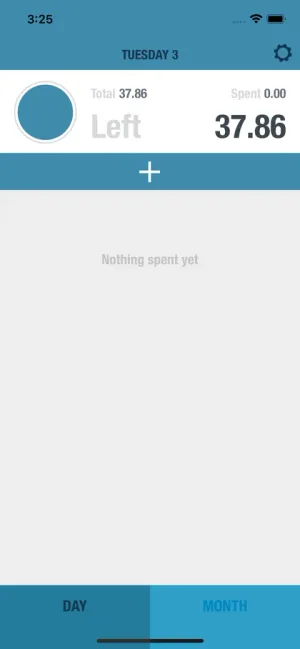
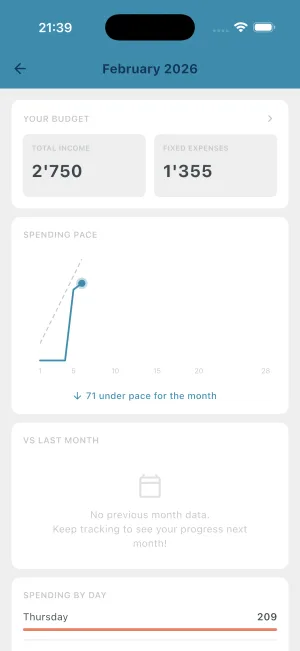
That’s exactly what a daily spending number is good at catching. When your groceries come out of one clear daily limit, an extra $30 shop shows up immediately instead of surfacing as a shock at month’s end. You set your income, bills, and savings once; the app does the math and shows you what’s safe to spend today — groceries included.
Groceries vs. Your Total Food Budget
One reason people feel confused about grocery spending is that they quietly mix two different things: groceries and eating out. They’re separate lines in a healthy budget, and blurring them hides where the money actually goes.
Groceries are the food and household basics you buy to prepare and eat at home. Dining out — restaurants, takeout, coffee runs, delivery — is its own category, and for many households it’s where the real overspending hides. It’s entirely possible to have a perfectly reasonable grocery bill and still blow your food budget on the four takeaway orders you barely remember placing.
So when you’re deciding whether you spend “too much on food,” look at both numbers separately. If your groceries are on target but your total food spending feels high, the problem isn’t the grocery store — it’s the dining-out line, and that’s usually the easier one to trim without feeling deprived. Cooking one or two of those restaurant meals at home instead often saves more than an hour of coupon-clipping ever would. Keeping the two categories distinct is what lets you see that clearly.
When to Revisit Your Number
A grocery budget isn’t a set-it-and-forget-it figure. The right number drifts as your life and prices change, so it’s worth a quick check a few times a year rather than only when something feels off.
- When your household changes. A new baby, a teenager hitting a growth spurt, a kid moving out, a partner moving in — each shifts your target meaningfully. Growing children are the sneakiest: the budget that fit last year can quietly become too tight without anyone noticing why.
- When prices move. Grocery prices don’t sit still, and a budget set two years ago may simply no longer be realistic. If you’re consistently going over despite shopping well, the honest fix might be to raise the target rather than keep white-knuckling an outdated one.
- At the start of a busy season. Holidays, summer with kids home, and back-to-school all bump food spending. Nudging your number up for those stretches — and back down afterward — beats feeling like you failed every December.
The point isn’t to obsess over the figure. It’s to make sure the target still matches reality, so it stays a helpful guide rather than a source of guilt. A five-minute check each season keeps it honest.
The Bottom Line
There’s no universal “right” grocery number — but there is a right number for you, and it’s not hard to find. Start with your household size, sanity-check it against 10–12% of your income, and adjust for your city and your habits. A single person might land around $400 a month, a family of four around $1,000–1,300, and both can be completely reasonable.
The figure matters less than the habit: pick a target, track against it, and you’ll never again stand in the aisle wondering if you’re overspending. You’ll simply know.
Knowing your grocery number is the easy part — sticking to it is where BUDGT helps. It shows your daily spending limit after bills and savings, so your weekly shop always fits the plan.
Frequently Asked Questions
How much should I spend on groceries per month?
A common guideline is 10-12% of your take-home pay. In dollar terms for 2026, a single person typically spends $300-550/month, a couple $550-950, and a family of four roughly $900-1,500 — the lower end reflects careful, cook-at-home budgeting and the higher end a more moderate plan. Use your own income as the anchor and adjust for where you live.
How much should a family of 4 spend on groceries?
In 2026, a family of four commonly spends between about $900 and $1,500 a month, depending on the kids' ages, your region, and how much you cook at home. A budget-focused family with school-age kids can often land near $900-1,100; a moderate plan runs $1,200-1,500. Teenagers push the number toward the top of the range.
What percentage of income should go to groceries?
Most budgets put groceries at 10-12% of take-home pay, sitting inside the broader food category. If groceries are eating much more than 15% of your income, it's usually a sign to review your shopping habits or, in high cost-of-living areas, to rebalance other categories. The percentage is a guide, not a rule — your household size matters just as much as your income.
What is the average grocery spend in the US?
It varies widely by household size and region, but USDA food-plan data and household surveys put typical monthly grocery spending in 2026 at roughly $300-550 for one person and $900-1,500 for a family of four. 'Average' is less useful than a number built from your own income, household size, and habits.
How can I lower my grocery budget?
The biggest levers are planning meals before you shop, buying store brands, shopping the unit price, and cutting food waste — the average household throws away about a third of the food it buys. A dedicated guide walks through 20 specific tactics that routinely cut a family bill by $300+ a month without couponing.
Does where I live change how much I should spend?
Significantly. Grocery prices vary a lot by region — high cost-of-living cities can run 20-30% above the national figures, while lower-cost areas fall below them. Treat the household-size ranges as a national starting point and adjust up or down for your local prices.
Related Articles


Ready to take control of your budget?
Download BUDGT and start tracking your daily spending today.