$50,000 a Year Is How Much a Month? Your Real Take-Home Breakdown

If you’ve just been offered a $50,000 salary — or you’re trying to budget on one — the first question is usually the most practical one: how much is that a month? It sounds simple, but there are actually two answers, and confusing them is one of the most common budgeting mistakes people make.
The short version: $50,000 a year is $4,167 a month before tax, and roughly $3,400–$3,700 a month in take-home pay. Below we’ll break down both numbers, show you what each paycheck looks like, and — most importantly — turn it into something you can actually budget with.
The Quick Answer
$50,000 divided by 12 months is $4,167 per month gross (before any deductions). But you never see all of that. After federal income tax, FICA (Social Security and Medicare), and state tax, your take-home pay is typically around $3,400–$3,700 a month.
That gap — roughly $500–$750 a month — is the single most important thing to understand about your salary. Your $50,000 “is” $4,167 a month on paper, but you budget from the ~$3,500 that actually reaches your bank account. Build your budget on the gross figure and you’ll come up short every single month.
$50,000 by Month, Paycheck, and Week
Here’s what a $50,000 salary looks like broken down across every common pay period, on a gross (pre-tax) basis:
| Pay period | Gross amount |
|---|---|
| Per year | $50,000 |
| Per month | $4,167 |
| Twice a month (24 checks) | $2,083 |
| Every two weeks (26 checks) | $1,923 |
| Per week | $962 |
| Per hour (40 hrs/week) | ~$24 |
One detail catches a lot of people out: if you’re paid every two weeks, there are 26 pay periods in a year, not 24. That means two months a year you’ll get three paychecks instead of two. Those “extra” checks are one of the best savings opportunities you have — if you budget around your normal two-check months, the third is almost pure surplus.
What You Actually Keep
Your take-home pay depends on three deductions, and understanding them demystifies your paycheck:
- FICA (7.65%): Social Security and Medicare, taken from everyone at a flat rate. On $50,000 that’s about $3,825 a year, or ~$319 a month. This one doesn’t vary.
- Federal income tax: Progressive, so only part of your income is taxed at each rate. At $50,000 as a single filer, your effective federal rate is usually around 10–12% after the standard deduction — much lower than your top bracket.
- State income tax: This is where location matters most. Nine states have no income tax at all; others range from about 2% to over 5% at this income.
Add those up and your total deductions typically land around 17–22% of gross, which is how $4,167/month becomes roughly $3,400–$3,700/month. Here’s how the state picture shifts things:
| Your situation | Rough monthly take-home |
|---|---|
| No-income-tax state (TX, FL, etc.) | ~$3,650–$3,750 |
| Average-tax state | ~$3,450–$3,600 |
| High-tax state (CA, NY, etc.) | ~$3,350–$3,500 |
These are estimates for a single filer with no pre-tax 401(k) — your exact number depends on your deductions, filing status, and contributions. If you contribute to a traditional 401(k), your take-home drops but your taxable income does too, so more of each dollar goes to your future self.
What $50,000 Means for Your Budget
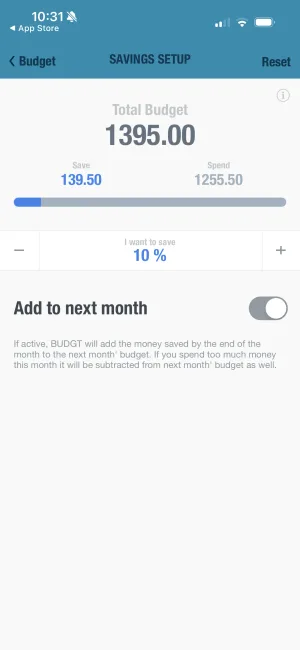
Knowing the monthly number is only useful if you turn it into a plan. On roughly $3,500 take-home, a workable starting split looks like this: keep housing near 25% (about $1,040), aim to save 10–15% of gross ($415–$625), cover your fixed bills, and let the rest fund everyday spending.
The tightest spot on $50,000 is almost always housing. In lower-cost areas, 25% comfortably rents a decent one-bedroom; in expensive cities, you may need roommates or a longer commute to keep housing from eating your savings rate. Everything downstream — how much you can save, how much daily breathing room you have — flows from that one decision.
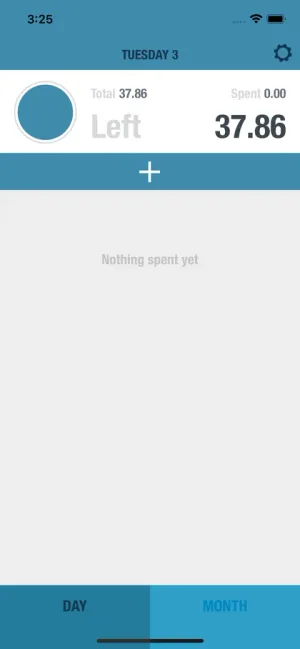
For a complete, interactive breakdown with your exact numbers, our $50K salary guide walks through the full budget and daily spending limit:
Is $50,000 a Good Salary?
It’s a fair question, and the honest answer is: it depends entirely on where and how you live. $50,000 sits close to the US median for a full-time worker, which means half the country earns less. In much of the Midwest and South, it supports a comfortable life with room to save. In San Francisco or New York, the same salary feels tight the moment rent is paid.
What matters more than the number is the habits you build around it. Plenty of people on $50,000 save more and stress less than people earning twice as much, simply because they know their numbers and spend intentionally. A salary is raw material; your budget is what turns it into security. The people who thrive on $50,000 are the ones who treat that ~$3,500 a month as a plan, not a mystery.
Making $50,000 Go Further
If your $50,000 feels tighter than you’d like, the levers are the same ones that work at any income — they just matter more when the margin is thinner. Keep housing and transport (your two biggest fixed costs) as lean as you reasonably can, since every dollar saved there frees up a dollar elsewhere. Automate your savings on payday so it happens before you can spend it. And track your everyday spending against a daily number, because on $50,000 it’s the small, unnoticed purchases — not the big ones — that quietly decide whether the month ends in the black.
Above all, use those biweekly “third paycheck” months deliberately. Two or three times a year, a chunk of near-surplus income lands in your account; sending it straight to savings or debt can do more for your finances than months of small economies. The difference between $50,000 feeling like “just getting by” and “building momentum” usually comes down to catching moments like that on purpose.
Gross vs. Net: The Mistake That Wrecks Budgets
It’s worth dwelling on the gross-versus-net gap, because getting it wrong is one of the most common — and most painful — budgeting errors. When people hear “$50,000 a year,” their brain does the easy math: $4,167 a month. Then they build a budget around that figure, allocating rent, car, savings, and spending as if $4,167 is what they have to work with.
But $4,167 never arrives. What arrives is closer to $3,500. So a budget built on the gross number is roughly $650 a month too optimistic, every single month — and that gap is exactly why so many people feel mysteriously short even though “the numbers should work.” The numbers don’t work, because they were the wrong numbers from the start.
The fix is simple: always budget from take-home pay. Look at what actually hits your bank account — the number on your deposit, not your offer letter — and build your plan from there. If you’re paid via direct deposit, the amount you see land is your real monthly income (times your number of paychecks). Everything else in your budget should flow from that figure, not the headline salary. It’s a small mental switch that quietly fixes a huge share of “where does my money go?” frustration.
How $50,000 Compares
Context helps, too. A $50,000 salary doesn’t exist in isolation — it’s one rung on a ladder, and seeing the rungs around it makes your own number easier to plan around.
Compared with a $40,000 salary (about $3,333/month gross), $50K gives you roughly $700 more a month before tax — often the difference between just covering essentials and having real room to save. Step up to $60,000 ($5,000/month gross) and you gain another ~$830 a month, which is usually where meaningful wealth-building becomes comfortable rather than a stretch. The jumps feel large, but so does lifestyle inflation: the households that pull ahead are the ones who bank most of each raise instead of absorbing it into bigger rent and nicer cars.
That’s the real lesson of comparing salaries. Your income sets the ceiling on what’s possible, but your habits decide how much of that ceiling you actually reach. Someone disciplined on $50,000 routinely out-saves someone careless on $70,000 — because the person who knows their real monthly number and spends against a plan is always ahead of the person guessing from a gross figure.
The Bottom Line
$50,000 a year is $4,167 a month gross and roughly $3,400–$3,700 take-home — and the take-home figure is the one that matters. Build your budget on what actually lands in your account, keep housing near 25%, save a steady 10–15%, and use your extra paychecks well. Do that, and a $50,000 salary is more than enough to live comfortably and build real security in most of the country.
Know your real monthly number, give it a plan, and $50,000 stops being a question and starts being a foundation.
$50,000 a year comes to about $3,500 a month in your pocket. BUDGT turns that into a daily spending limit after bills and savings — so a median salary goes further than you’d expect.
Frequently Asked Questions
$50,000 a year is how much a month?
$50,000 a year is $4,167 a month before tax ($50,000 ÷ 12). After federal tax, FICA, and state tax, your take-home pay is typically around $3,400–$3,700 a month, depending on your state and deductions. The gross figure is what your salary 'is'; the take-home figure is what actually lands in your account and what you budget from.
How much is $50,000 a year per paycheck?
It depends on your pay schedule. Paid twice a month (24 checks), $50,000 is about $2,083 gross per check. Paid every two weeks (26 checks), it's about $1,923 gross. Weekly, it's about $962 gross. Take-home per check is roughly 17–22% lower after taxes.
What is the take-home pay on $50,000?
After federal income tax, FICA (7.65%), and state tax, take-home on $50,000 is usually around $3,400–$3,700 a month. No-income-tax states (Texas, Florida, and others) land at the higher end; higher-tax states like California or New York land lower. Pre-tax 401(k) contributions reduce your taxable income and change the exact figure.
Is $50,000 a year a good salary?
$50,000 is close to the US median for a full-time worker and provides comfortable living in much of the country, especially outside major coastal cities. It's enough to cover essentials, save consistently, and build an emergency fund with disciplined budgeting — though high cost-of-living areas make housing the tight spot.
How much is $50,000 a year biweekly?
Paid every two weeks, $50,000 a year is about $1,923 gross per paycheck ($50,000 ÷ 26). Note that a biweekly schedule has 26 pay periods — so two months a year you receive three paychecks, which is a great opportunity to boost savings.
How much of $50,000 should I save?
Aim for 10–20% of your income. On $50,000, that's roughly $415–$830 a month. Start with enough 401(k) to capture any employer match (free money), then build a starter emergency fund, then work toward a Roth IRA. Even 10% consistently beats a higher rate you can't sustain.
Related Articles



Ready to take control of your budget?
Download BUDGT and start tracking your daily spending today.