Budgeting for Irregular Income: A Freelancer's Guide

“How much can I spend today?” is a simple question with a complicated answer when you’re a freelancer.
Your income might be $2,000 one month and $8,000 the next. Traditional budgeting advice assumes predictable paychecks landing on the 1st and 15th. That doesn’t apply to you.
Whether you’re a freelance designer, rideshare driver, consultant, server earning tips, or anyone else with variable income, this guide will help you create a budget that actually works — one that smooths out the chaos and gives you clarity every single day.
Why Traditional Budgeting Fails Freelancers
Most budgeting methods start with: “Take your monthly income and subtract your expenses.”
But what’s your monthly income? Is it January’s $3,200 or March’s $7,500? Do you budget for the best case, worst case, or somewhere in between?
Typical Freelancer Monthly Income Variation
This unpredictability creates specific problems:
| Challenge | What Happens |
|---|---|
| Feast months | Temptation to overspend (“I earned it!”) |
| Famine months | Panic, stress, and scrambling to pay bills |
| No withholding | Surprise tax bills at year-end |
| Planning paralysis | Hard to commit to savings or big purchases |
| Emotional rollercoaster | Money anxiety becomes constant |
The solution isn’t to predict your income better. It’s to build a system that creates predictability from unpredictability.
The Baseline Budget Method
The most effective approach for variable income is surprisingly simple: budget for your worst month, every month.
Step 1: Calculate Your Baseline Income
Look at your income from the past 12 months (or as long as you have data). Find the lowest amount you reasonably expect to earn in a typical month.
This isn’t your absolute worst month ever — if you had one catastrophic month, that’s an outlier. Your baseline is a realistic floor.
Example calculation:
- Last 12 months income: $3,200, $5,100, $7,500, $4,200, $2,800, $6,300, $4,800, $5,500, $3,900, $6,100, $4,400, $5,200
- Lowest typical month: $3,200
- Your baseline: $3,500 (slightly above absolute minimum for safety)
Step 2: Build Your Budget on the Baseline
Now create your budget assuming you’ll earn your baseline amount every single month:
Freelancer Baseline Budget
Your realistic floor
Taxes aren't withheld
Enter your numbers above - results update automatically
If you can cover all your expenses and save something on your worst months, you’ll thrive on your best months.
Step 3: Set Up Your Buffer Account
This is where the magic happens. Create a separate checking or high-yield savings account — this is your buffer account.
How it works:
- All income flows here first — every client payment, every gig payout
- Pay yourself a consistent “salary” — transfer your baseline amount to your regular checking on the 1st of each month
- Buffer absorbs the variation — high months build it up, low months draw it down
- Sweep excess to savings — when buffer exceeds 2-3 months of baseline, invest the surplus
You’ve essentially created a W-2-like experience from freelance chaos. Your checking account receives the same amount every month regardless of what clients actually paid.
The Tax Set-Aside System
Nothing derails a freelancer’s finances faster than a surprise tax bill. Unlike employees, no one withholds taxes from your payments.
The 30% Rule
The moment money hits your buffer account:
| Tax Type | Approximate Rate |
|---|---|
| Federal income tax | 12-22% (varies by bracket) |
| Self-employment tax | 15.3% |
| State income tax | 0-13% (varies by state) |
| Safe set-aside | 25-30% |
The Immediate Transfer System
- Client pays you $5,000
- Money lands in buffer account
- Immediately transfer $1,500 (30%) to a separate tax savings account
- $3,500 remains for your baseline “salary” and buffer building
Don’t wait. Don’t “plan to do it later.” The transfer happens the same day the money arrives.
Quarterly Estimated Payments
Self-employed individuals must pay estimated taxes quarterly:
| Due Date | Covers |
|---|---|
| April 15 | Q1 (Jan-Mar) |
| June 15 | Q2 (Apr-May) |
| September 15 | Q3 (Jun-Aug) |
| January 15 | Q4 (Sep-Dec) |
Your tax savings account builds up, then you pay from it each quarter. No scrambling, no surprise bills.
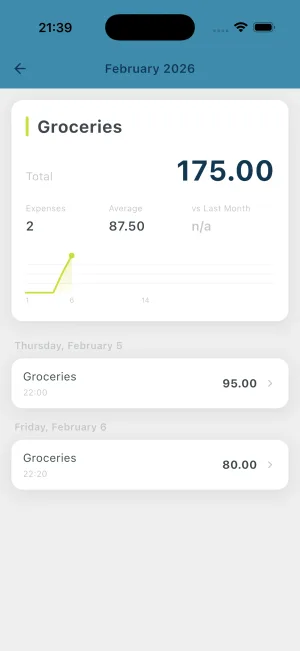
The Three-Account System
Here’s the complete structure for freelancer finances:
| Account | Purpose | Target Balance |
|---|---|---|
| Buffer Account | Income smoothing | 2-3 months of baseline |
| Tax Savings | Quarterly estimated payments | Next quarter’s estimate |
| Regular Checking | Daily spending | 1 month’s spending |
Plus your emergency fund and investment accounts, which operate separately.
The flow looks like this:
- Income arrives → Buffer account
- 30% immediately → Tax savings
- 1st of month → Baseline “salary” to checking
- Buffer exceeds 3 months? → Sweep to investments
Managing Feast and Famine Months
When You Have a Great Month
A $10,000 month feels amazing. Here’s how to handle it without sabotaging yourself:
Do this:
- Transfer 30% to taxes ($3,000)
- Top up buffer to 2-3 months if needed
- Make normal “salary” transfer to checking
- Sweep excess to investments or goals
Avoid this:
- Treating it as permission to spend more
- Skipping the tax transfer (“I’ll catch up later”)
- Inflating your lifestyle baseline
- Assuming next month will be just as good
Your daily budget doesn’t change just because you had a great month.
When You Have a Terrible Month
A $1,500 month feels scary. Here’s how to stay calm:
Do this:
- Draw from buffer account (that’s what it’s for)
- Continue your normal “salary” and daily budget
- Assess whether this is temporary or a trend
- Focus on client outreach if needed
Avoid this:
- Panic-cutting all discretionary spending
- Using credit cards to bridge the gap
- Dipping into emergency fund for regular expenses
- Making desperate financial decisions
If your buffer runs low repeatedly, your baseline may need adjustment downward.
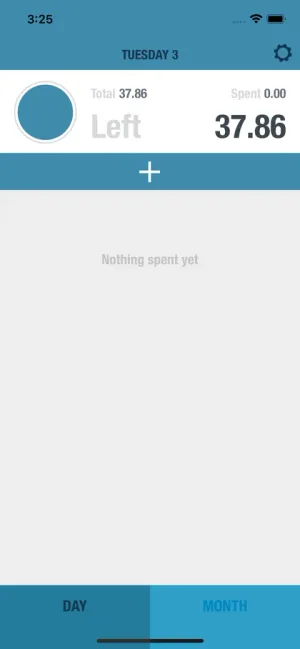
Why Daily Budgeting Works Better for Freelancers
Monthly budgets break down with variable income. You don’t know if it’s a $3,000 month or $7,000 month until it’s over.
Daily budgeting solves this:
| Monthly Approach | Daily Approach |
|---|---|
| Budget based on unpredictable income | Budget based on stable baseline |
| Adjust spending mid-month as income changes | Same daily limit regardless of this month’s income |
| Feast-or-famine spending patterns | Consistent spending patterns |
| Emotional money decisions | Systematic money decisions |
Once your buffer system is running, your daily budget stays the same whether you earned $2,000 or $8,000 this month. The buffer absorbed the variation — your life didn’t have to.
Common Freelancer Budgeting Mistakes
Mistake 1: Budgeting on Average Income
If your average is $5,000 but some months are $2,500, budgeting on average means you can’t cover expenses in lean months.
Fix: Budget on baseline (floor), not average.
Mistake 2: Treating Windfalls as Spending Money
A $12,000 month doesn’t mean $12,000 of lifestyle.
Fix: Windfalls accelerate goals (buffer, savings, investments) — not spending.
Mistake 3: Forgetting Self-Employment Tax
15.3% self-employment tax is on top of income tax. Many freelancers only set aside for income tax and get hit with an extra bill.
Fix: Set aside 25-30%, not 15-20%.
Mistake 4: Skipping the Buffer
Going directly from income to spending creates chaos. Every freelancer needs income smoothing.
Fix: Buffer account is non-negotiable for variable income.
Mistake 5: Lifestyle Creep After Good Months
Two great months in a row, and suddenly you have a new car payment.
Fix: Increase lifestyle only when your baseline income increases — not individual months.
Building Long-Term Stability
Emergency Fund for Freelancers
Traditional advice says 3-4 months of expenses. Freelancers need more:
| Situation | Emergency Fund Target |
|---|---|
| Employee with stable job | 3-4 months |
| Freelancer with diverse clients | 6 months |
| Freelancer with 1-2 clients | 8-12 months |
This is separate from your buffer account. The buffer smooths normal variation; emergency fund handles true emergencies (illness, client loss, equipment failure).
Retirement Savings Options
Self-employed individuals have powerful retirement options:
| Account | 2026 Limit | Best For |
|---|---|---|
| SEP-IRA | Up to $69,000 | High earners, simple setup |
| Solo 401(k) | $23,000 + employer match | Maximum contributions |
| Traditional IRA | $7,000 | Everyone (income limits for deduction) |
| Roth IRA | $7,000 | Tax-free growth |
A Solo 401(k) can shelter over $60,000 annually — far more than W-2 employees can access.
Health Insurance Planning
Without employer coverage, health insurance is a major expense. Budget for:
| Coverage Type | Typical Monthly Cost |
|---|---|
| Marketplace (Bronze) | $300-500 individual |
| Marketplace (Silver) | $400-700 individual |
| Short-term | $150-300 (limited coverage) |
| Health share | $200-500 (not insurance) |
Shop the marketplace annually during open enrollment. Subsidies may be available depending on income.
Your Freelancer Budget Checklist
Getting started:
- Calculate your baseline income (lowest typical month)
- Open a buffer account (separate from checking)
- Open a tax savings account
- Set up automatic 30% tax transfers
- Create baseline budget covering all fixed expenses
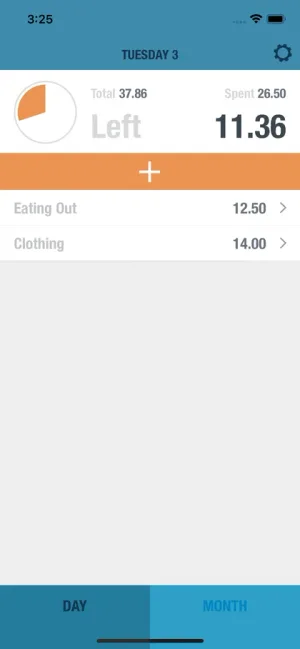
- Determine your daily spending limit
Ongoing:
- All income flows to buffer first
- Monthly “salary” transfer on the 1st
- Quarterly estimated tax payments
- Sweep excess buffer to investments
- Review baseline quarterly
The Freedom of Financial Systems
Freelancing offers incredible freedom — flexible hours, choosing your clients, working from anywhere. But that freedom comes with financial complexity.
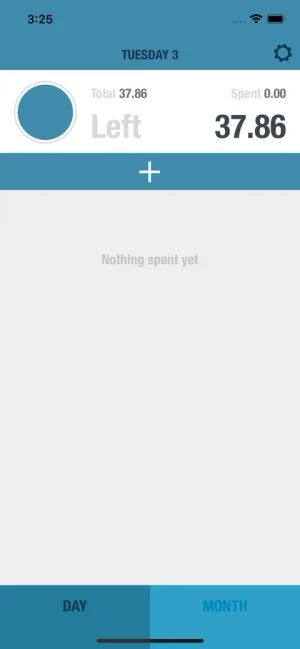
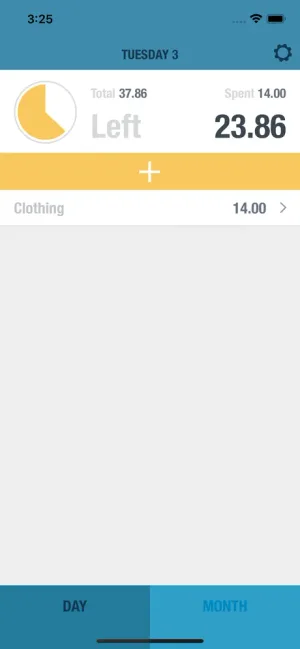
Building the right system — baseline budget, buffer account, tax savings, daily tracking — transforms that complexity into clarity. You stop wondering if you can afford things. You stop stressing about slow months. You stop dreading tax season.
Instead, you have a clear daily number. You know exactly what’s safe to spend. And you can enjoy the freedom you chose freelancing for in the first place.
Frequently Asked Questions
How do you budget when your income changes every month?
Use the baseline budget method: calculate your lowest expected monthly income, budget all fixed expenses against that floor, and funnel all income through a buffer account. Pay yourself a consistent 'salary' from the buffer regardless of what you actually earned that month.
What percentage should freelancers set aside for taxes?
Most US freelancers should set aside 25-30% of gross income for taxes. This covers federal income tax, state tax (if applicable), and the 15.3% self-employment tax. Transfer this percentage to a separate tax savings account immediately when you receive payment.
How much emergency fund do freelancers need?
Freelancers should aim for 6 months of expenses in their emergency fund, compared to 3-4 months for traditional employees. The larger buffer accounts for income unpredictability and the time it may take to find new clients during slow periods.
What's a buffer account for variable income?
A buffer account is a separate checking or savings account where all your income flows first. You pay yourself a consistent monthly amount from this buffer, creating predictable cash flow regardless of actual income. When the buffer exceeds 2-3 months of expenses, sweep the excess to savings.
Should freelancers use monthly or daily budgeting?
Daily budgeting works especially well for irregular income earners. Once you've set up your baseline budget and buffer system, your daily spending limit stays consistent even when monthly income varies wildly. This removes the emotional rollercoaster of feast-and-famine months.
How do freelancers handle months with no income?
Your buffer account covers lean months — that's exactly what it's for. Continue paying yourself your baseline 'salary' from the buffer, maintain your normal daily budget, and avoid panic cuts. If zero-income months become frequent, reassess your baseline or client acquisition strategy.
Related Articles


Ready to take control of your budget?
Download BUDGT and start tracking your daily spending today.