The Daily Budget Method: Why It Works Better Than Monthly Budgeting

You’ve tried budgeting. You’ve set up categories, tracked expenses, allocated percentages. And somewhere around week two, you stopped.
You’re not alone. Most budgets fail not because people lack discipline, but because traditional monthly budgeting is fundamentally hard to stick with.
The daily budget method is different. One number. One question: “Can I afford this today?”
Why Monthly Budgets Fail
Traditional budgeting asks you to:
- Track spending across 10-20 categories
- Remember what you’ve spent so far this month
- Calculate what’s left in each category
- Make decisions based on a 30-day timeframe
That’s a lot of mental overhead. And it leads to problems:
| Problem | What Happens |
|---|---|
| Too abstract | ”$400 left for groceries” doesn’t guide today’s decisions |
| Delayed feedback | You don’t know you overspent until month end |
| Category shuffling | Moving money between categories feels like cheating |
| All-or-nothing | One bad week and people give up entirely |
| Decision fatigue | Every purchase requires mental math |
The Daily Budget Method
Instead of tracking categories, you calculate one number: what you can safely spend today.
The Formula
| Step | Calculation |
|---|---|
| Start with monthly income | $5,000 |
| Subtract fixed expenses | - $2,000 (rent, utilities, subscriptions) |
| Subtract savings goal | - $500 (pay yourself first) |
| Flexible spending | = $2,500 |
| Divide by days in month | ÷ 30 |
| Daily budget | = $83/day |
That’s it. You have $83 to spend today on everything that’s not a fixed bill.
How It Works Day-to-Day
Morning: Check your number
Open your app. See what you can spend today. That's your limit.
Throughout the day: Log expenses
Coffee, lunch, groceries — log each purchase. Takes 10 seconds.
Before purchases: Quick check
Want to buy something? Check if you have room in today's budget.
End of day: See where you stand
Spent less than your daily budget? Great. More? Tomorrow adjusts.
The Magic: Automatic Adjustment
Here’s what makes daily budgeting powerful:
| Scenario | What Happens |
|---|---|
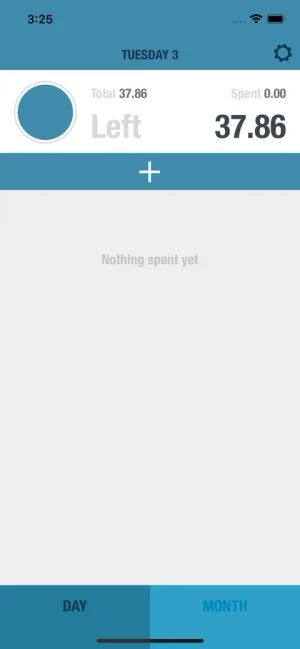
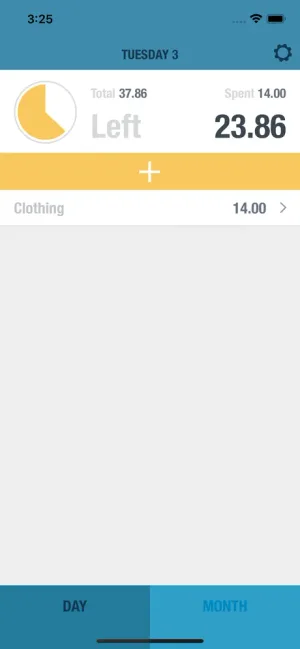
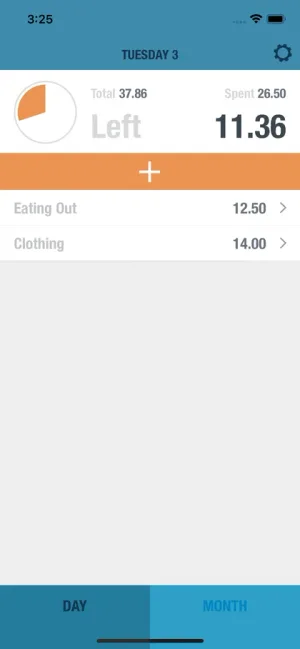
| Underspend | Surplus carries forward — tomorrow you have more |
| Overspend | Deficit spreads over remaining days — tomorrow has less |
| Big purchase | Daily budget drops to absorb it |
| Unexpected income | Daily budget increases |
No manual rebalancing. No guilt. Just math.
Daily vs. Monthly: The Comparison
Mental Load Comparison
| Factor | Monthly Budget | Daily Budget |
|---|---|---|
| Numbers to track | 10-20 categories | 1 number |
| Decision speed | Slow (check multiple categories) | Fast (check one number) |
| Feedback loop | End of month | Immediate |
| Recovery from overspending | Complicated rebalancing | Automatic adjustment |
| Mental overhead | High | Low |
| Stickiness | Low (most people quit) | High (simple to maintain) |
The Psychology Behind Daily Budgets
Immediate Feedback
When you overspend on a monthly budget, you might not realize it for weeks. By then, the damage is done and the connection between spending and consequence is lost.
Daily budgets give immediate feedback:
- Spent $120 on a $100 day? You see it right away.
- Tomorrow’s budget adjusts. You feel the consequence.
- The feedback loop is tight enough to change behavior.
Simplicity Wins
The best budget is the one you’ll actually use. And simplicity drives usage.
| Approach | Complexity | Stick Rate |
|---|---|---|
| Detailed category tracking | High | ~20% after 3 months |
| Envelope budgeting | Medium | ~35% after 3 months |
| Daily budget method | Low | ~60% after 3 months |
One Decision, Not Twenty
Traditional budgeting forces multiple decisions:
- “Is this in my entertainment budget?”
- “How much have I spent on dining this month?”
- “Can I move money from groceries to personal care?”
Daily budgeting asks one question: “Do I have room in today’s budget?”
Setting Up Your Daily Budget
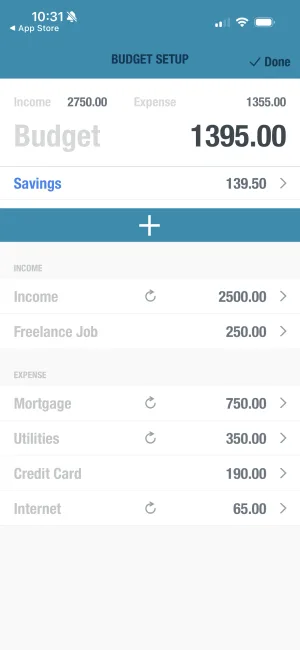
Step 1: Calculate Your Fixed Expenses
| Category | Amount |
|---|---|
| Rent/mortgage | $ |
| Utilities | $ |
| Insurance | $ |
| Subscriptions | $ |
| Loan payments | $ |
| Total fixed | $ |
Step 2: Set Your Savings Goal
Aim for 10-20% of income. This comes out before your daily budget is calculated.
| Income Level | Suggested Savings | Monthly Amount |
|---|---|---|
| $40,000/year | 10% | $333 |
| $60,000/year | 15% | $750 |
| $80,000/year | 18% | $1,200 |
| $100,000/year | 20% | $1,667 |
Step 3: Calculate Your Daily Budget
Monthly income - Fixed expenses - Savings = Flexible spending
Flexible spending ÷ Days in month = Daily budget

Handling Irregular Expenses
Planned Large Expenses
Have a $300 car repair coming? Two options:
- Absorb it — Your daily budget drops for the rest of the month
- Save for it — Set aside money in advance (sinking fund style)
| Approach | Impact |
|---|---|
| $300 expense absorbed over 20 remaining days | Daily budget drops $15/day |
| $300 saved over 3 months | $100/month from daily budget |
Unexpected Expenses
When the unexpected hits, your daily budget adjusts automatically. No rebalancing required — the math handles it.
Variable Income
If your income varies, calculate your daily budget based on:
- Conservative: Your lowest typical month
- Average: Your average over 6-12 months
- Dynamic: Recalculate each month based on actual income
Common Questions
”What if my daily budget is too low?”
If your daily budget comes out uncomfortably low, that’s important information. It means one of three things:
- Fixed expenses are too high — Time to cut subscriptions or housing costs
- Savings goal is ambitious — Maybe temporarily reduce it
- Income needs to increase — Hard truth, but valuable to see clearly
”How do I handle weekly expenses?”
Some people prefer weekly budgets:
| Daily Budget | Weekly Equivalent |
|---|---|
| $50/day | $350/week |
| $75/day | $525/week |
| $100/day | $700/week |
Both work. Daily gives tighter feedback; weekly gives more flexibility.
”What about annual expenses?”
Divide annual expenses by 12 and include them in your monthly fixed costs, or set up a sinking fund.
| Annual Expense | Monthly Set-Aside |
|---|---|
| $1,200 car insurance | $100/month |
| $600 subscriptions (annual) | $50/month |
| $2,400 holiday spending | $200/month |
Making It Stick
The First Week
Focus on logging, not perfection. Just track everything for 7 days.
Week Two
Start using your daily budget to guide decisions. Before buying, check if you have room.
Week Three
Notice patterns. Which days do you overspend? What triggers it?
Week Four and Beyond
The habit is forming. Daily logging takes 30 seconds. Checking your budget before purchases becomes automatic.

The Bottom Line
Monthly budgets fail because they’re too complex and feedback comes too late. Daily budgets work because:
- One number is easier than twenty categories
- Immediate feedback connects spending to consequences
- Automatic adjustment removes manual rebalancing
- Simplicity means you’ll actually stick with it
You don’t need a complicated system. You need one number you can check before every purchase.
Ready to try the daily budget method? BUDGT calculates your daily spending limit and gives you color-coded feedback throughout the day. One number. One glance. Total clarity.
Frequently Asked Questions
What is the daily budget method?
The daily budget method calculates a single daily spending limit by taking your monthly income, subtracting fixed expenses and savings, then dividing by days in the month. Instead of tracking dozens of categories, you focus on one number: what you can safely spend today.
How do I calculate my daily budget?
Monthly income minus fixed expenses (rent, utilities, subscriptions) minus savings goal, divided by days in the month. Example: $5,000 income - $2,000 fixed - $500 savings = $2,500 flexible ÷ 30 days = $83/day.
Is daily budgeting better than monthly budgeting?
For many people, yes. Monthly budgets require tracking multiple categories and making decisions based on what's left after 30 days. Daily budgets give immediate feedback — you know right now if you can afford something. The simplicity makes it easier to stick with.
What if I overspend one day?
Your daily budget adjusts. If you spend $120 on a $100/day budget, tomorrow's limit drops to account for it. This creates natural correction without guilt or complicated rebalancing across categories.
Does daily budgeting work for irregular expenses?
Yes. Large planned expenses (like a car repair) reduce your daily budget for the rest of the month. Unexpected expenses do the same. The daily number always reflects reality — what you can actually spend today given everything else.
Related Articles



Ready to take control of your budget?
Download BUDGT and start tracking your daily spending today.