How to Get Your Partner on Board with Budgeting

Money is the number one source of conflict in relationships. More than chores. More than parenting. More than in-laws.
But here’s the thing: most money fights aren’t really about money. They’re about values, priorities, fear, and control. The budget is just where those tensions become visible.
If you’re the “budgeter” in your relationship and your partner seems resistant, this guide is for you. Not how to win the argument — how to actually get on the same team.
Why Partners Resist Budgeting
Before you can bring someone on board, you need to understand why they’re not already there.
Common reasons partners resist budgeting:
| Resistance | What It Really Means |
|---|---|
| ”I don’t want to track every penny” | Fears loss of autonomy and freedom |
| ”We make enough money” | Avoiding confronting actual financial situation |
| ”Budgets are too restrictive” | Past negative experiences with money scarcity |
| ”I’m not good with numbers” | Feels inadequate or judged |
| ”You handle the money” | Avoiding responsibility (or deferring to perceived expert) |
| “We’ll figure it out later” | Procrastination, overwhelm, or denial |
Notice: none of these are “I love wasting money” or “I want us to be broke.” Your partner isn’t the enemy. They’re responding to something deeper.
Start with Goals, Not Rules
The worst way to start a budget conversation:
“We need to stop spending so much on takeout.”
The better way:
“I’ve been thinking about what we want for our future. Can we talk about our goals?”
Why this works: Goals are positive and collaborative. Rules are negative and controlling. When you lead with “let’s stop doing X,” your partner hears criticism. When you lead with “what do we want,” your partner hears partnership.
Questions that open productive conversations:
- “What would financial security look like for us?”
- “If money weren’t an issue, what would we do differently?”
- “What’s one money worry you’d love to eliminate?”
- “Where do you want to be financially in 5 years?”
You might be surprised. Your partner might want the same things you do — they just haven’t connected daily spending to those goals yet.
Find Your Shared Priorities
Before discussing budgets, discover what you both actually value.
Exercise: Independent priority lists
Each partner writes their top 5 financial priorities. Don’t share until both are done.
Examples:
- Pay off credit cards
- Emergency fund
- Save for house down payment
- Retire early
- Travel more
- Kids’ college fund
- New car
- Home renovations
- Start a business
Then compare. Most couples find 2-3 overlapping priorities. That’s your starting point. Build your budget around those shared goals first.
For conflicts, try alternating: “You pick one priority, I pick one, and we’ll both work on both.”
Choose a Simple System
Complex budgets kill couple participation. If your system requires categorizing every transaction into 47 buckets, your partner will quit within a week.
Simplicity wins for couples:
| System | Complexity | Good For |
|---|---|---|
| Daily spending limit | Very low | Couples where one resists tracking |
| 50/30/20 rule | Low | General guidelines without detail |
| Envelope method | Medium | Tactile learners, cash-preferred |
| Zero-based budgeting | High | Detail-oriented couples |
| Full transaction tracking | Very high | Both partners enjoy data |
Recommendation: Start simpler than you think you need. A system you both use at 70% is better than a perfect system only one person uses.
Calculate total income
Add up all money coming in each month from both partners.
Subtract fixed expenses
Rent, utilities, insurance, subscriptions — things that don't change.
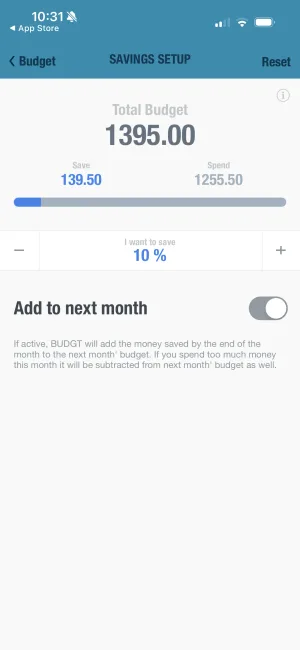
Subtract savings goal
Agree on a savings amount and treat it as non-negotiable.
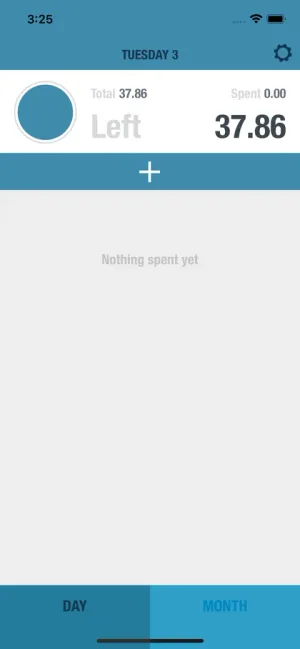
Divide the rest by days
What's left is your daily spending budget. Both partners can spend freely up to this limit.
Check in weekly
A 10-minute weekly review keeps you aligned without micromanaging.
The Personal Spending Allowance
This one trick saves more relationships than any other budgeting strategy:
Give each partner guilt-free personal spending money.
Call it “fun money,” “allowance,” or “no-questions-asked money.” Each partner gets a fixed amount per month to spend however they want. No justification required. No judgment.
Why it works:
- Autonomy preserved — neither partner feels controlled
- No more fights about hobbies, clothes, or coffee
- Built-in flexibility for different spending styles
- Both partners sacrifice equally
How much? Start with something reasonable — maybe 5-10% of your take-home pay each. Adjust based on your budget and goals.
The key: this money is truly judgment-free. If your partner wants to spend their entire allowance on video games, that’s their choice. You don’t get a vote.
Have Regular Money Dates
One big annual conversation won’t work. Regular, brief check-ins keep you aligned and prevent issues from festering.
The monthly money date:
- Schedule it: Same time each month, 30 minutes max
- Make it pleasant: Coffee, wine, comfortable setting
- Review together: What did we spend? Did we hit our goals?
- Plan together: Any upcoming expenses? Adjust anything?
- Celebrate wins: Even small progress deserves acknowledgment
Rules for money dates:
- No blame for past spending
- Focus on the future, not the past
- Both partners speak equally
- If it gets heated, pause and reschedule
- End on something positive
Some couples prefer weekly 10-minute check-ins. Whatever cadence keeps you connected without feeling like a chore.
When You Earn Different Amounts
Income disparity adds complexity. The higher earner might feel entitled to more say; the lower earner might feel guilty or resentful.
Options for splitting expenses:
| Method | How It Works | Best When |
|---|---|---|
| 50/50 | Each pays half of shared expenses | Similar incomes |
| Proportional | Each pays based on income percentage | Different incomes |
| One pays all | Higher earner covers shared expenses | Very different incomes |
| All income pooled | Everything goes into joint account | Full financial merger |
Example (proportional): Partner A earns $6,000/month, Partner B earns $4,000/month. Total shared expenses are $3,000.
- Partner A pays 60%: $1,800
- Partner B pays 40%: $1,200
There’s no universally right answer. What matters is that both partners feel the system is fair.
What If They Still Won’t Budge?
You’ve tried everything. They’re still not interested. Now what?
Options:
1. Lead by example
Budget your own income. Don’t criticize their spending. When they see your stress decrease and progress increase, they may become curious.
2. Start with one goal
“Full budgeting” might overwhelm them. But “let’s save $200/month for a vacation” might not. Pick one concrete, exciting goal and build from there.
3. Automate the important stuff
Set up automatic transfers to savings, automatic bill pay, automatic retirement contributions. If the critical money moves before either of you can spend it, you’re protected even without full buy-in.
4. Protect yourself
In serious cases where your partner’s spending threatens your financial security, you may need to separate finances. This isn’t about punishment — it’s about protecting your future while you work on the relationship.
5. Consider counseling
If money conflicts are damaging your relationship, a financial therapist or couples counselor can help. Money issues are often symptoms of deeper relationship dynamics.
Scripts That Work
Sometimes the hardest part is knowing what to say. Here are conversation starters:
Opening the conversation:
“I’ve been thinking about our future and I’d love to talk about what we want financially. Not to criticize anything — just to dream a little. Can we find 20 minutes this weekend?”
When they say budgets are restrictive:
“I hear you. What if we designed something that gives us both freedom? Like, we each get money to spend however we want, no questions asked. The budget just protects our shared goals.”
When they avoid the topic:
“I notice we both get stressed when money comes up. What would make it easier to talk about? I really want us to be a team on this.”
When they say you handle it:
“I’m happy to do the logistics, but I want us to make decisions together. Otherwise I feel like the money police, and that’s not good for either of us.”
When you disagree on priorities:
“We clearly want different things, and that’s okay. What if we each pick one priority and we fund both? We’re partners — we don’t have to agree on everything to support each other.”
The Goal: Same Team
Budgeting with a partner isn’t about control. It’s about building a life together with intention.
The best couples budgeting systems share these traits:
- Simple enough that both partners actually use them
- Fair in how they divide responsibility and autonomy
- Flexible enough to accommodate different spending styles
- Focused on shared goals, not mutual criticism
- Regular check-ins that are pleasant, not painful
Start small. Stay patient. Lead with curiosity instead of criticism.
You’re not trying to change your partner. You’re trying to find a system that works for both of you.
Frequently Asked Questions
How do I talk to my partner about budgeting without starting a fight?
Start with shared goals, not spending criticism. Ask 'What do we want our money to do for us?' instead of 'Why did you spend so much?' Focus on the future, not past mistakes. Choose a calm moment, not right after a bill arrives.
What if my partner refuses to budget?
Find out why. Some people resist budgeting because it feels restrictive or reminds them of past money stress. Try a simpler approach — like a daily spending limit instead of detailed categories. Make it about freedom ('this is what we can spend guilt-free') not restriction.
Should couples have joint or separate accounts?
There's no right answer. Many couples use a hybrid: joint account for shared expenses (rent, utilities, groceries) and separate accounts for personal spending. The key is transparency about the overall financial picture, not the specific account structure.
How often should couples talk about money?
A monthly money date works well for most couples — 30 minutes to review the past month and plan the next one. Keep it brief, scheduled, and judgment-free. Some couples prefer weekly 10-minute check-ins instead.
What if we have different spending styles?
That's normal. One partner often saves more naturally while the other spends more freely. The goal isn't to change each other but to find a system that gives both partners autonomy within agreed boundaries. Personal spending allowances help.
How do we set financial goals together?
Start by each listing your top 3 financial priorities independently. Then compare and find overlap. You might be surprised how much you agree on. For conflicts, take turns prioritizing — one goal from each person, then revisit.
Related Articles



Ready to take control of your budget?
Download BUDGT and start tracking your daily spending today.