Pay Yourself First: The Savings Strategy That Actually Works

Pay Yourself First: The Savings Strategy That Actually Works
Most people save money backwards. They pay bills, spend on life, and save whatever’s left at the end of the month.
Here’s the problem: there’s never anything left.
“Pay yourself first” flips this equation. Instead of saving last, you save first—automatically, before you even see the money. This simple switch transforms savings from intention to reality.
How “Pay Yourself First” Works
The concept is elegant in its simplicity:
- Income arrives (paycheck hits your account)
- Savings transfer happens automatically (before you touch anything)
- Live on the remainder (what’s left is for bills and spending)
That’s it. The order matters more than the amount.
Traditional Approach (Doesn’t Work)
Income → Bills → Spending → “Savings” (if anything remains)
Result: Savings = $0 most months
Pay Yourself First (Works)
Income → Savings → Bills → Spending
Result: Savings grows consistently
Why This Strategy Works
Removes Decision-Making
Saving manually requires willpower every single time. Should I transfer money this month? How much? Can I afford it?
Automation answers these questions once, then executes forever.
Creates Artificial Scarcity
When the money is gone before you see it, you adjust your spending accordingly. You literally cannot spend what isn’t there.
Defeats Lifestyle Creep
As income grows, automated savings percentages grow with it. You never have the chance to expand spending to fill new income.
Makes Compound Interest Real
Consistent monthly contributions + time = significant wealth. Adjust the slider to see how your savings grow:
Key insight: At $200/month, your investments will earn 2.4x more than you contribute. Time + consistency = wealth.
Setting Up “Pay Yourself First”
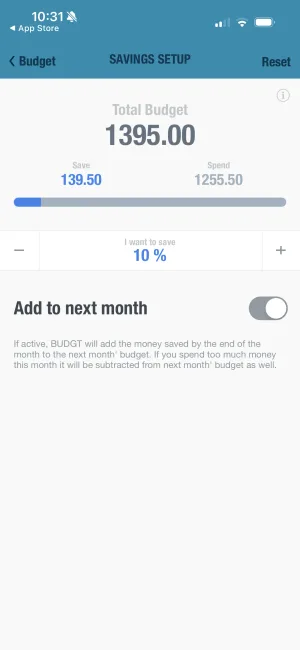
Determine Your Savings Rate
Ideal target: 20% of gross income. Good starting point: 10%. Minimum viable: whatever you can sustain ($25-100/paycheck). If 20% feels impossible, start smaller—5% is infinitely better than 0%.
Choose Your Savings Destination
Emergency fund if you have less than $1,000 saved. Retirement accounts (401k, IRA). High-yield savings for short-term goals (4%+ APY). Investment accounts for long-term wealth building.
Automate the Transfer
Bank automatic transfer on payday, direct deposit split through HR, or 401(k) withholding. The less you touch the money, the better.
The Raise Strategy
Here’s where “pay yourself first” gets powerful:
When you get a raise, increase savings by half the raise amount.
Example:
- Current salary: $60,000, saving 10% ($6,000/year)
- Get 5% raise: New salary $63,000
- Increase savings by 2.5%: Now saving 12.5% ($7,875/year)
You still feel the raise (spending goes up), but savings accelerates. Over time, you reach 20%+ savings without feeling it.
Handling Tight Budgets
“I can’t afford to save anything right now” is the most common objection. Often it’s not true—it’s just uncomfortable.
The $20 Experiment
For one month, automatically save $20 per paycheck. See what happens.
Most people don’t notice. The $40/month disappears into spending anyway when it’s available. When it’s not, you adjust.
The “I’ll Feel It” Reality
Yes, you might feel the missing money initially. That discomfort fades within 2-3 weeks as you adjust. The alternative—never saving—is worse.
The Tight Budget Exception
If you genuinely cannot cover basic necessities, focus there first. But be honest: is this true scarcity, or just uncomfortable adjustment?
Many people with “tight budgets” have subscriptions, dining out, and shopping that could fund savings.
Emergency Fund First
Before aggressive retirement saving, build an emergency fund.
Target: 3-6 months of essential expenses Starter target: $500-1,000
Without emergency savings, unexpected expenses (car repair, medical bill, job loss) go on credit cards, creating debt that erases progress.
Once you have $1,000 saved, you can split “pay yourself first” between emergency fund growth and retirement accounts.
Retirement Account Priorities
Priority 1: Employer 401(k) Match
If your employer matches contributions (commonly 3-6% of salary), contribute at least enough to get the full match. This is literally free money—an immediate 100% return.
Example: Employer matches 50% of contributions up to 6% of salary
- Your contribution: 6% ($3,600 on $60k salary)
- Employer match: 3% ($1,800)
- Total: $5,400/year for “cost” of $3,600
Priority 2: Max Out Match, Then Consider Roth IRA
After capturing full employer match, consider a Roth IRA for tax-free growth. Contributions are after-tax, but growth and withdrawals are tax-free.
Priority 3: Increase 401(k) Contributions
Work toward maxing out 401(k) contributions ($23,500 limit in 2026 for under 50).
Common “Pay Yourself First” Mistakes
Starting Too High
20% from zero is aggressive. Many people set this, fail, and give up entirely. Start lower, build gradually, maintain consistency.
Not Automating
Manual saving requires constant decisions. Automate and remove the choice from the equation.
Using Easily Accessible Accounts
Savings in your primary checking account will get spent. Use separate accounts, ideally at different banks.
Forgetting Employer Match
Not contributing enough to get full 401(k) match is leaving free money on the table.
Ignoring Emergency Fund
Skipping emergency fund for retirement contributions backfires when unexpected expenses force credit card use.
Making It Stick
Review Quarterly
Check if your savings rate is sustainable and if you can increase it.
Increase Annually
Each year, bump your percentage by 1-2 points until you reach your target.
Celebrate Milestones
Hit $1,000 saved? Acknowledge it. $10,000? Celebrate (cheaply). Progress deserves recognition.
Protect the Automation
When money gets tight, the temptation is to pause automatic savings. Resist unless absolutely necessary. Consistent saving matters more than optimal amounts.
The Long-Term Impact
Small, consistent savings compound into life-changing amounts:
$200/month from age 25 to 65 at 7% average returns = $525,000+
That’s $96,000 contributed, $429,000+ in growth.
The key isn’t the amount—it’s the consistency and time. Pay yourself first makes consistency automatic.
Your Action Plan
Today:
- Decide on a starting percentage (even 5%)
- Calculate the dollar amount per paycheck
This week:
- Set up automatic transfer from checking to savings on payday
- If employer offers 401(k) match, ensure you’re capturing it
This month:
- Live on the remainder without dipping into savings
- Notice how quickly you adjust
Ongoing:
- Increase percentage with every raise
- Review and adjust quarterly
Pay yourself first isn’t complicated. It’s just doing things in the right order—and letting automation handle the discipline.
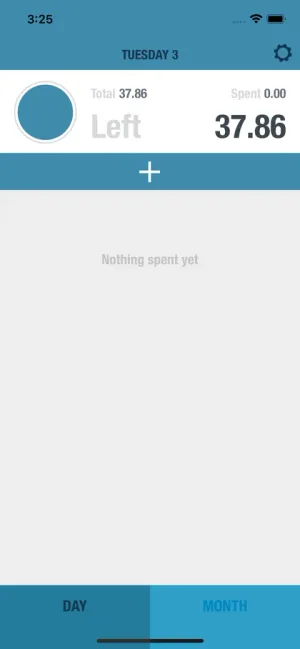
Track your daily spending after paying yourself first with BUDGT. See what’s safe to spend from what remains, keeping you on track without detailed budgeting.
Frequently Asked Questions
What does 'pay yourself first' mean?
Pay yourself first means automatically transferring money to savings before paying bills or spending on anything else. Rather than saving what's 'left over' at month's end (usually nothing), you prioritize savings by moving money immediately when you get paid.
How much should I pay myself first?
Start with whatever you can consistently maintain—even $25 per paycheck. A common target is 20% of income, but 10% or 5% works if that's what's sustainable. The amount matters less than the consistency. You can always increase the percentage gradually.
Where should I put the money I pay myself first?
Use a separate savings account that's not linked to your debit card—making the money slightly harder to access reduces temptation. High-yield savings accounts offer 4%+ APY. For retirement savings, use 401(k)s or IRAs which offer tax advantages.
What if I can't afford to save anything right now?
Start with $5-10 per paycheck. The habit matters more than the amount. As you adjust to living on less, you can increase gradually. Many people discover they don't miss small amounts—the money simply disappears into savings instead of random spending.
Should I pay myself first before paying off debt?
Build a small emergency fund ($500-1,000) first while paying minimum debt payments. Without emergency savings, unexpected expenses go on credit cards, creating more debt. Once you have a basic buffer, aggressively pay down high-interest debt.
How do I automate 'pay yourself first'?
Set up automatic transfers scheduled for payday. Most banks allow recurring transfers between accounts. You can also have your employer split direct deposit between checking and savings accounts. Automation removes the decision and willpower from the equation.
What's the difference between 'pay yourself first' and a regular budget?
Traditional budgets allocate money to categories and save what's left. Pay yourself first reverses this—savings is removed immediately, and you live on the remainder. This subtle shift dramatically increases actual savings because there's no 'leftover' to spend.
Related Articles


Ready to take control of your budget?
Download BUDGT and start tracking your daily spending today.