Why Most Budgets Fail (And the Simple Fix)
You’ve tried budgeting before. Maybe multiple times.
You downloaded the spreadsheet. You categorized your expenses into 47 different buckets. You set ambitious targets. And then, somewhere around week three, you stopped updating it. The spreadsheet sits unopened, a monument to good intentions.
You’re not alone. Studies suggest roughly 80% of budgets fail within the first few months.
But here’s what nobody tells you: The problem isn’t you. It’s the budget.
Why Traditional Budgets Break Down
Common Reasons Budgets Fail
Let’s break down the four main failure points:
Problem 1: Complexity
The typical budget advice says: “Track every expense in categories like groceries, dining out, coffee, entertainment, subscriptions, household items, personal care, transportation, gas, parking, tolls…”
By the time you’ve categorized your 47th expense of the month, you’re exhausted. And the moment tracking feels like a chore, you stop doing it.
The pattern: Week 1 = diligent tracking. Week 2 = pretty good. Week 3 = “I’ll catch up later.” Week 4 = budget abandoned.
Problem 2: Unrealistic Limits
Most people create budgets based on how they think they should spend, not how they actually spend.
“I should only spend $400 on groceries.” But you’ve been spending $600 for years.
“I should eat out twice a month.” But your social life depends on dinner with friends.
Budgets based on “should” instead of reality are doomed from the start.
Problem 3: Infrequent Feedback
Monthly budgets provide feedback… monthly. By the time you realize you overspent on dining out, you’ve already overspent for three weeks. The damage is done.
Imagine trying to lose weight but only checking the scale once a month. You’d have no idea if your changes were working until it was too late to adjust.
Problem 4: Shame Cycles
You go over budget on entertainment. You feel like a failure. That shame makes you avoid looking at your budget. Avoiding the budget means you overspend more. More overspending creates more shame.
The shame spiral is one of the most common reasons budgets fail — and it’s entirely avoidable with a different approach.
The Psychology of Budget Failure
Understanding why we fail helps us design something that works.
Decision Fatigue
Every spending decision costs mental energy. When you have to think “Does this fit my entertainment budget?” for every purchase, you exhaust your decision-making capacity.
Solution: Reduce decisions. Instead of 20 categories to manage, have one number that tells you if you can afford something today.
Abstraction Distance
“$3,500 per month for flexible spending” feels abstract. It’s hard to connect a coffee purchase to a monthly number.
Solution: Make it concrete. “$117 today” is tangible. A $5 coffee clearly uses up 4% of today’s budget.
All-or-Nothing Thinking
One bad spending day feels like failure. “I already blew the budget, so I might as well keep spending.”
Solution: Daily resets. Tomorrow is a fresh $117, regardless of today. One bad day doesn’t ruin the month.
Delayed Consequences
Swiping a card feels painless. The consequence (the credit card bill) is weeks away.
Solution: Immediate feedback. Seeing your remaining daily budget drop the moment you spend creates an instant connection between action and consequence.
The Simple Fix: One Number
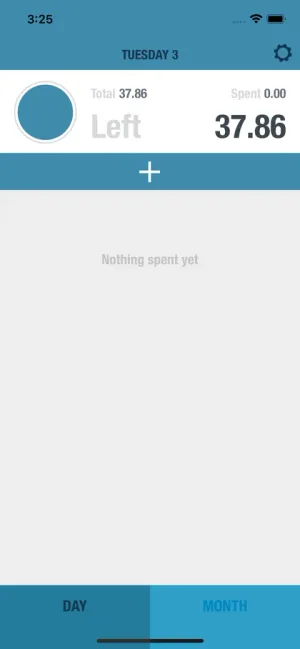
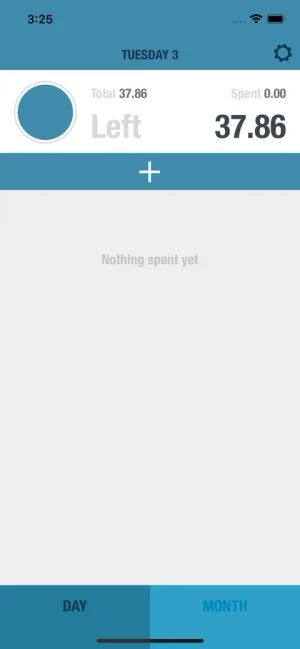
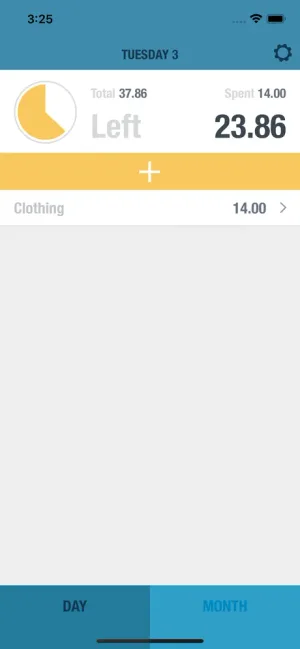
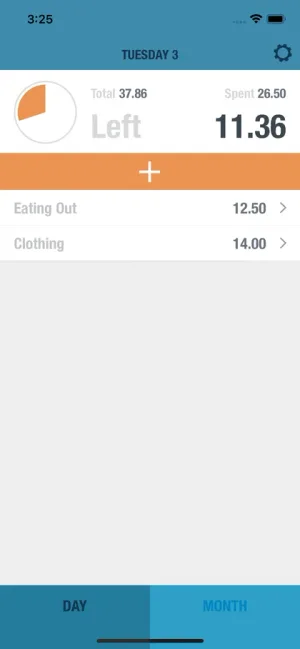
What if, instead of tracking 20 categories, you only had to know one number?
Your daily spending limit.
Here’s how it works:
| Component | What It Is |
|---|---|
| Monthly income | Your take-home pay |
| Fixed expenses | Rent, utilities, insurance, subscriptions |
| Savings | What you commit to saving |
| Daily budget | Everything left, divided by days in the month |
Example:
| Line Item | Amount |
|---|---|
| Monthly income | $4,500 |
| Fixed expenses | -$2,200 |
| Savings goal | -$400 |
| Flexible spending | = $1,900 |
| Daily budget (÷30) | $63/day |
That’s it. Your one number is $63.
Every day, you have $63 to spend on anything — groceries, coffee, dining out, entertainment, shopping, whatever. You don’t need to categorize. You just need to stay around $63 per day.
Why Daily Budgeting Works
Immediate Feedback
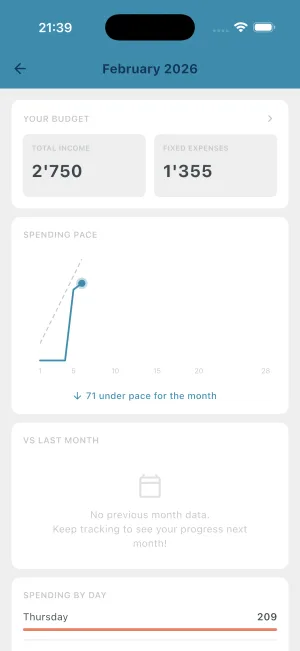
You know within 24 hours if you’re on track. No waiting until month-end to discover problems.
Monthly approach: “I’m $400 over budget” (discovered on the 28th) Daily approach: “I’m $20 over today” (discovered before bed)
Easy Course Correction
Spent $80 yesterday on a date night? Spend $46 today instead of $63. Problem solved.
Daily budgeting turns big monthly problems into small daily adjustments.
Reduced Decision Complexity
“Can I afford this?” becomes simple math:
- Daily budget: $63
- Spent so far today: $25
- This purchase: $15
- Remaining: $23
No category checking. No spreadsheet consulting. Just basic addition.
Built-In Flexibility
Want to splurge on a nice dinner? Spend less the day before and after. The flexibility is automatic — no recategorizing, no guilt about busting the “dining out” category.
Fresh Start Every Day
Had a bad spending day? Tomorrow you get your full $63 again. The daily reset prevents shame spirals. You can’t “ruin the month” — only the day, and even that’s fixable over the next few days.
Making the Switch
Step 1: Track Your Real Spending (1-2 Weeks)
Before setting a daily budget, know your reality. Track everything for two weeks without trying to change anything.
This reveals:
- What you actually spend (not what you think you spend)
- Hidden recurring charges
- Spending patterns you weren’t aware of
Step 2: Calculate Your Daily Number
Your equation:
Monthly income
- Fixed expenses (rent, utilities, insurance, debt minimums)
- Savings goal = Flexible spending
Flexible spending ÷ 30 = Daily budget
Be honest with your fixed expenses. Include everything that’s truly fixed.
Step 3: Live It for One Month
Check your daily budget once per day — morning or evening, whichever works for you.
Rules:
- Overspend one day? Underspend the next
- Big planned expense coming? Save daily budget for a few days beforehand
- Unexpected expense? Spread the impact over several days
Step 4: Adjust If Needed
After one month, evaluate:
- Did you consistently overspend? Your daily number might be too low (or your fixed expenses need trimming)
- Did you consistently underspend? Great — increase your savings
- About right? Keep going
Common Objections (And Why They’re Solvable)
“But I need to track categories for insight”
You can still review your spending monthly if you want. But for daily decisions, one number is enough. Insight is valuable; real-time complexity is not.
”What about irregular expenses?”
Annual insurance premium? Car registration? These are fixed expenses — save for them monthly and exclude from your daily budget.
If something truly irregular pops up, spread the daily budget impact: $300 unexpected expense ÷ 5 days = $60 less per day for a week.
”My income varies each month”
Use your lowest typical month as your baseline. Higher income months become bonus savings, not lifestyle inflation.
”This seems too simple”
That’s the point. Complicated budgets fail because they’re complicated. Simple approaches work because they’re sustainable.
The Mindset Shift
Traditional budgeting feels like restriction: “You can’t buy that. You’re over the entertainment budget.”
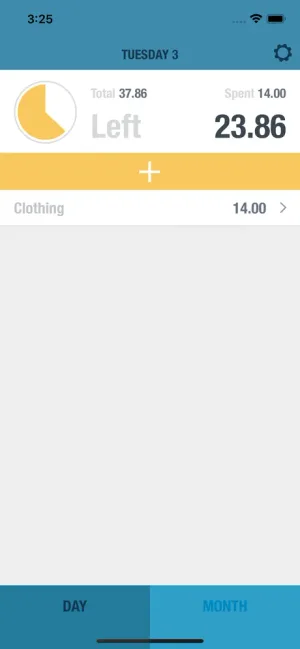
Daily budgeting feels like clarity: “You have $40 left today. Your call.”
The difference is profound. One approach creates guilt and avoidance. The other creates informed choice and freedom.
You’re not restricted to any category. You have full flexibility. You just have one number to work with per day.
When Budgets Finally Work
Budgets work when they:
- Are simple enough to maintain — One number beats 20 categories
- Provide frequent feedback — Daily beats monthly
- Allow for flexibility — Bad days can be balanced by good days
- Don’t rely on shame — Course correction, not punishment
The 80% of budgets that fail aren’t failing because people are bad with money. They’re failing because the method doesn’t match how human brains work.
When you design a budget that works with human psychology instead of against it, suddenly “sticking to a budget” becomes almost automatic.
Your One-Week Challenge
Try this for seven days:
- Calculate your daily number (income - fixed - savings, divided by 30)
- Check it once per day (morning or evening)
- Don’t categorize anything — just stay around your number
- If you overspend, underspend the next day
That’s it. No spreadsheets. No guilt. Just one number, seven days.
Most people who try daily budgeting for a week never go back to monthly categories. The simplicity is that powerful.
Frequently Asked Questions
Why do most budgets fail?
Most budgets fail because they're designed wrong, not because people lack discipline. Common issues include: budgets that are too complicated to maintain, unrealistic spending limits, no flexibility for unexpected expenses, infrequent tracking (monthly instead of daily), and shame-based approaches that cause people to abandon the budget after small mistakes.
What is the biggest budgeting mistake?
The biggest budgeting mistake is creating a budget based on how you think you should spend rather than how you actually spend. A budget disconnected from reality will always fail. Start by tracking your real spending for 2-4 weeks before creating spending limits.
How do I stick to a budget?
The key to sticking to a budget is simplicity and daily awareness. Instead of tracking dozens of categories, focus on one number: your daily spending limit. Check it briefly each day. When you overspend one day, adjust the next. Small daily corrections prevent big monthly failures.
Why do I keep failing at budgeting?
Repeated budget failure usually means the method doesn't fit your life. Consider: Is the budget too complicated? Too restrictive? Not connected to your actual spending patterns? Try a simpler approach — many people succeed with daily budgeting after failing with traditional monthly methods.
What percentage of people fail at budgeting?
Studies show that roughly 80% of budgets are abandoned within the first few months. However, this says more about common budgeting methods than about people's ability to manage money. Simpler, more flexible approaches have much higher success rates.
Is daily budgeting better than monthly budgeting?
For many people, yes. Daily budgeting provides immediate feedback (you know within 24 hours if you're on track), prevents end-of-month surprises, and makes small course corrections easy. Monthly budgets often fail because problems compound for weeks before you notice them.
Related Articles


Ready to take control of your budget?
Download BUDGT and start tracking your daily spending today.