Money Dysmorphia: When Your Money Fears Don't Match Reality

Have you ever felt broke while your bank account was actually fine? Or breezed through a spending spree convinced everything was okay, only to get a nasty surprise later? That gap between how your money feels and how it actually is has a name that took off in 2026: money dysmorphia.
It’s more common than you’d think, and it has very little to do with how much you earn. It’s about perception — and the reassuring part is that perception can be corrected. Let’s look at what’s really going on and how to bring your money feelings back in line with the facts.
What Is Money Dysmorphia?
Money dysmorphia is a distorted perception of your financial situation — your emotions about money don’t match your actual numbers. It runs in both directions:
- Feeling broke when you’re not: stable finances, but constant anxiety, guilt over any spending, and an inability to enjoy what you’ve earned.
- Feeling fine when you’re not: a rosy sense of security while overspending quietly piles up.
Either way, the root is the same: you’re navigating by a feeling instead of a fact. And feelings, especially anxious ones, are unreliable narrators.
Why It’s So Common Now
Money dysmorphia didn’t appear from nowhere. Several very modern forces feed it:
| Driver | How it distorts your view |
|---|---|
| Social comparison | Everyone’s highlight reel makes your reality feel behind |
| Past scarcity | Financial stress earlier in life keeps the alarm on, even when things improve |
| Vague numbers | Not knowing where you stand lets anxiety invent a story |
| Information overload | Endless “you’re doing it wrong” content erodes confidence |
Notice that most of these are about perception, not your actual balance. That’s the key to unlocking it.
Signs You Might Have Money Dysmorphia
| Sign | What it feels like |
|---|---|
| Feeling broke regardless of balance | The number never feels like “enough” |
| Can’t enjoy earned money | Guilt over any non-essential purchase |
| Constant comparison | Measuring yourself against others’ spending |
| Avoiding your accounts | Not looking because looking feels scary |
| Emotions ignore the facts | Your money mood doesn’t track your money reality |
If several of these land, it’s not a flaw — it’s a signal that your perception needs better information.
How to Realign Perception With Reality
The antidote to a distorted picture is a clear one. You don’t fix money dysmorphia by earning more — you fix it by looking, gently and regularly, until facts replace fear.
Look at your real numbers
Income, spending, savings. Not to judge — just to see. Reality is almost always less scary than the story.
Make checking a small habit
A brief, regular glance beats an anxious avoid-then-panic cycle. Familiarity lowers the fear.
Anchor to one clear figure
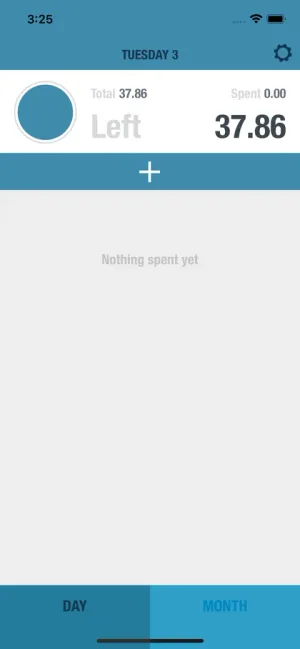
A daily spending number gives you something concrete and reassuring to check instead of a vague unknown.
Limit the comparison feed
Mute the accounts that make you feel behind. You're comparing your reality to their highlight reel.
Name real progress
Track and acknowledge what's actually improving — an emergency fund growing, a balance shrinking.
Clarity Is Calming
The reason a simple daily budget helps so much with money dysmorphia isn’t the math — it’s the certainty. When you can glance at one honest number and know exactly what’s safe to spend today, there’s no room left for anxiety to invent a worse story. You’re no longer guessing; you’re informed.
That’s also why an app that keeps everything in one private place, with no bank login to dread opening, makes checking feel safe rather than scary. The easier it is to look, the faster your perception catches up to your reality.
The Two Faces of Money Dysmorphia
Because money dysmorphia is about distorted perception, it doesn’t look the same for everyone. Recognizing which direction yours tends to run makes it much easier to correct.
Feeling broke when you’re actually okay. This is the more common version, and often the more painful. You might have a stable income, a growing emergency fund, and no urgent debt — and still feel a low hum of financial dread. You hesitate over small purchases, feel guilty spending on yourself, and never quite believe you have “enough.” This version frequently traces back to a time when money genuinely was tight; your nervous system learned to stay on alert, and it never got the memo that things changed. The cost isn’t just stress — it’s a life quietly under-lived out of a fear that no longer matches reality.
Feeling fine when you’re actually not. The opposite distortion is quieter but riskier. Here, spending feels comfortable and “handled” even as balances creep up and savings stall. Small luxuries feel deserved and consequences feel distant. This version is often protected by not looking — as long as you don’t check the numbers, the comfortable story holds. It tends to end with an unwelcome surprise: a declined card, a bill you can’t cover, a moment where the real picture finally breaks through.
Both are the same underlying problem — a gap between story and reality — and both close the same way: by gently, regularly looking at the actual numbers until they, not your anxiety, become the source of truth.
The Comparison Trap
Nothing distorts your sense of your own finances faster than watching everyone else’s. Social feeds are a highlight reel — the vacations, the renovations, the new cars — with all the debt, stress, and family help carefully cropped out. You end up comparing your complete, unfiltered financial reality against everyone else’s edited best moments, and of course you come up feeling behind.
The trap is that this comparison feels like information when it’s really just noise. You have no idea whether the person posting the trip paid cash, put it on a card, or had it gifted. Measuring your worth or progress against that is like grading your first draft against someone else’s published book. The most effective single move against money dysmorphia is often the simplest: mute or unfollow the accounts that reliably leave you feeling poorer. You’re not missing out on anything real — just turning down the volume on a distortion.
A Simple Reality-Check Exercise
When the anxious story gets loud, the fastest way to quiet it is to replace the vague feeling with three concrete facts. Take five minutes and write down:
- What actually came in this month (your real income).
- What actually went out (your real spending, roughly grouped).
- What you actually have set aside (savings and emergency fund).
That’s it. No optimizing, no judging — just seeing. Most people who do this discover their reality is meaningfully calmer than the story their anxiety was telling. And if the numbers do reveal a problem, that’s not a disaster either — it’s the first honest step toward fixing it, which beats the slow dread of not knowing. Repeat it monthly and the exercise stops being scary and starts being reassuring. Familiarity is the cure for financial fear.
Building Money Confidence Over Time
Correcting money dysmorphia isn’t a one-time fix — it’s a confidence you build by repetition. The first time you look honestly at your numbers, it may feel uncomfortable; the tenth time, it feels routine; by the thirtieth, checking in becomes almost reassuring. That progression is the whole game. Financial fear thrives on the unknown, and every calm look you take shrinks the unknown a little more.
A few things accelerate it. Celebrate real progress, out loud to yourself. When your emergency fund crosses a milestone or a balance finally drops, actually acknowledge it — anxiety is quick to notice problems and slow to notice wins, so you have to deliberately point out the wins. Keep your comparisons internal. The only fair benchmark is where you were last month or last year, not where a stranger’s highlight reel says you should be. And separate your worth from your balance. A number in an account measures one narrow thing; it was never a verdict on you as a person, and treating it that way is what gives it the power to distort how you feel.
If, after all this, the fear stays loud — if money anxiety is genuinely interfering with your sleep, your relationships, or your ability to function — that’s a sign it may be worth talking to a professional. Financial anxiety often travels with other anxiety, and there’s no prize for white-knuckling it alone. Clarity is the first tool; support is a perfectly valid second one.
The Bottom Line
Money dysmorphia is a gap between feeling and fact — and it’s incredibly common in a world of endless comparison and vague numbers. You don’t close that gap by earning more or being harder on yourself. You close it by looking clearly and often, anchoring to one honest daily number, muting the comparison, and celebrating the progress that’s actually real.
Your worth was never a balance. But a clear view of that balance is one of the kindest, most calming things you can give yourself.
Money dysmorphia feeds on the unknown. BUDGT gives you one clear, private daily number — so your sense of your finances is grounded in facts, not fear.
Frequently Asked Questions
What is money dysmorphia?
Money dysmorphia is a distorted perception of your financial situation — your feelings about money don't match the facts. It can go either way: feeling broke and anxious when your finances are actually stable, or feeling fine while quietly overspending. Like other distortions, the fix starts with looking clearly at reality.
What causes money dysmorphia?
A few things feed it: constant comparison on social media, financial stress or scarcity earlier in life, and simply not having a clear picture of your own numbers. When you don't know where you actually stand, anxiety fills the gap with a story — and that story is rarely accurate.
How do I know if I have money dysmorphia?
Common signs are feeling broke no matter what your balance says, being unable to enjoy money you've earned, constant comparison to others, or avoiding your accounts entirely because looking feels scary. If your money emotions consistently don't match your money facts, that's the tell.
How do I overcome money dysmorphia?
Replace the vague fear with real numbers. Look at your actual income, spending, and savings — gently and regularly — so your perception is grounded in facts, not anxiety. A simple daily budget gives you one clear, reassuring number to check instead of a scary unknown. Limiting comparison and celebrating real progress help too.
Is money dysmorphia the same as being bad with money?
No. Money dysmorphia is about perception, not skill — plenty of financially responsible people experience it. It's an anxiety and mindset issue, not a math one. That's actually good news: it responds to clarity and self-compassion, not just a bigger income.
Related Articles



Ready to take control of your budget?
Download BUDGT and start tracking your daily spending today.