Loud Budgeting: The 2026 Money Trend Worth Trying

For years, the unwritten rule was that money talk was awkward — so when you couldn’t afford something, you made a vague excuse or, worse, spent money you didn’t have just to save face. Loud budgeting flips that script, and it’s become one of the defining money trends of 2026 for a simple reason: it works.
The idea is refreshingly straightforward. Instead of quietly overspending, you just say it: “That’s not in my budget this month.” No shame, no elaborate excuse — a confident statement that your money has a plan and you’re sticking to it.
What Is Loud Budgeting?
Loud budgeting is being open about your financial choices rather than hiding them. Where the old approach treated a tight budget as something to conceal, loud budgeting treats it as something normal — even aspirational. You’re not admitting failure; you’re announcing priorities.
It’s the opposite of the quiet, expensive pressure to keep up. When “I’m saving for a house, so I’ll skip this one” is a perfectly acceptable thing to say out loud, a huge source of overspending simply disappears.
Why It Works
Social pressure is one of the biggest hidden forces in a budget. Loud budgeting defuses it in a few ways:
| What it does | Why it helps |
|---|---|
| Removes the shame | Declining an expensive plan becomes normal, not embarrassing |
| Kills the “keeping up” tax | You stop buying things just to fit in |
| Builds accountability | Saying goals out loud makes you more likely to hit them |
| Gives others permission | Often the whole group was hoping someone would suggest cheaper |
How to Try Loud Budgeting (Without the Awkwardness)
You don’t have to announce your bank balance to the room. Loud budgeting is confident, not oversharing.
| Situation | A loud-budgeting response |
|---|---|
| Pricey group dinner | ”That spot’s not in my budget — can we do somewhere cheaper?” |
| Weekend trip you can’t swing | ”I’m sitting this one out, I’m saving right now. Next time!” |
| Impulse group shopping | ”I’m on a no-buy this month — I’ll be your opinion, not a buyer.” |
| A friend overspending too | ”Want to do a free hangout instead? I’m watching my budget.” |
A few principles keep it smooth:
- Keep it light and matter-of-fact. Your tone tells people it’s no big deal — so it isn’t.
- Offer an alternative. “Not that, but how about this” keeps the connection, not just the no.
- You don’t owe a full explanation. “That’s not in the budget” is a complete sentence.
- Name the goal when it helps. “I’m building an emergency fund” turns a no into something people root for.
Loud Budgeting vs Being Cheap
This is the distinction that makes loud budgeting feel good rather than stingy:
- Being cheap avoids spending on principle, often at others’ expense.
- Loud budgeting spends intentionally and says so — happily paying for what matters, openly skipping what doesn’t.
You’re not refusing to enjoy life. You’re deciding where your money goes and being honest about it. That confidence is the whole point — and it’s contagious.
Where Loud Budgeting Came From
For decades, personal finance advice was exactly that — personal, meaning private. You didn’t discuss salaries, you didn’t admit you were on a budget, and you certainly didn’t tell a friend their plan was too expensive for you. That silence had a cost: it left everyone guessing, comparing, and quietly overspending to keep up appearances.
Loud budgeting emerged as a direct pushback against that culture. Instead of treating a budget as a source of embarrassment, it reframes talking openly about money as a sign of confidence and self-respect. The shift matters because so much overspending is social — driven by not wanting to be the person who says no. When saying no becomes normal, even admirable, the pressure loses its grip. It caught on because people were tired of going broke to look like they weren’t.
Loud Budgeting in Real Life
The principle is simple, but it plays out differently depending on who you’re talking to. Here’s how to apply it across the situations that usually cost the most.
With Friends
Friends are where loud budgeting does the most good, because friend groups often set a spending pace that quietly excludes anyone who can’t match it. Naming your budget breaks that spell. Try leading with connection, not the money: “I want to see you — can we do a walk or a home dinner instead of the tasting menu?” You keep the relationship and lose the expense. Nine times out of ten, at least one other person exhales and admits they were hoping for the cheaper option too.
With a Partner
Money is one of the most common sources of relationship tension, and almost all of it traces back to not talking. Loud budgeting inside a relationship means shared, judgment-free honesty about what you’re each working toward. Set a regular, low-stakes money check-in, name your joint goals out loud, and agree on a number above which you’ll flag a purchase to each other. The openness that feels awkward for five minutes prevents the resentment that festers for months.
At Work
Workplace spending — team lunches, birthday collections, after-work drinks, the expensive group gift — is a genuine budget drain that’s hard to decline because it feels social and semi-obligatory. A light, consistent script does the trick: “I’m going to skip lunch out today, but I’ll come sit with you all.” You’re opting out of the spend, not the people. Said calmly and often enough, it stops being remarkable.
With Family
Family spending — group vacations, holidays, gifts — carries the most emotional weight and the highest price tags. Loud budgeting here is about proposing new traditions rather than just declining old ones: a gift exchange with a set limit, a potluck instead of a catered holiday, a closer destination. Framing it as “let’s make this work for everyone” invites others in, and there’s almost always someone quietly relieved to spend less.
When People Push Back
Most of the time loud budgeting lands well. Occasionally someone reacts — usually because your honesty highlights their own discomfort, not because you did anything wrong. A few ways to hold your ground kindly:
| If someone… | You can say… |
|---|---|
| Pressures you to spend anyway | ”I hear you — it’s still not in my budget this month. Next time.” |
| Makes it awkward | ”It’s all good! I’m just being intentional right now.” |
| Offers to cover you | ”That’s really kind, but I’m good — let’s find something we can both do.” |
| Takes it personally | ”It’s nothing about you — I’ve got goals I’m sticking to.” |
The key is to stay warm and unbothered. You’re not apologizing for having a budget; you’re simply stating a fact about your priorities. People take their cue from your tone — if you’re relaxed about it, they will be too. And the ones who keep pushing are telling you something useful about how they treat their own money.
Loud Budgeting Isn’t All-or-Nothing
It’s worth saying clearly: loud budgeting doesn’t mean narrating every dollar or turning every dinner into a TED talk about your savings rate. That would be exhausting for you and everyone around you. The goal isn’t maximum disclosure — it’s ending the shame. You’re simply removing the rule that money struggles must be hidden, so that a plain “that’s not in my budget” becomes as unremarkable as “I can’t make it Thursday.”
You also get to choose your volume. For some people, loud budgeting is genuinely loud — posting savings goals, swapping tips openly, rallying friends into a no-buy together. For others, it’s quiet-but-honest: no announcements, just a calm refusal to pretend you can afford something you can’t. Both count. The trend gets framed as performative, but at its core it’s about one internal shift — deciding that your financial choices are nothing to apologize for — and then letting that show up in whatever way feels natural to you.
And it compounds socially. Every time you’re honest about a budget, you make it a little safer for the next person to be honest too. The friend who was quietly stressed about the group trip, the coworker dreading the collection, the family member relieved to cap the gift budget — your one plain sentence often gives a whole group permission to relax. That’s the real reason it spread: it turns out almost everyone was waiting for someone else to go first.
How to Start This Week
You don’t need a grand announcement to begin — just one honest moment. This week, pick a single upcoming situation where you’d normally overspend to keep up, and try the plain version instead: “That’s not in my budget right now — want to do something cheaper?” Notice how it actually lands. For most people, the anticipated awkwardness is far bigger than the real thing, and the relief of not pretending is immediate.
From there, it builds naturally. Add a cheaper alternative when you can, name a goal when it helps, and let each small, honest exchange make the next one easier. You’re not overhauling your personality — you’re just retiring one exhausting habit (spending to save face) and replacing it with a lighter one (telling the truth). Do it once and you’ll likely wonder why you carried the pretense for so long.
The Bottom Line
Loud budgeting works because it removes the quiet pressure that empties budgets — the urge to keep up, to save face, to avoid an awkward money moment. Say it plainly, offer an alternative, name your goal when it helps, and let your confidence do the rest. You’ll spend less, stress less, and probably give a few friends permission to do the same.
Your budget isn’t something to hide. In 2026, it’s something to own — out loud.
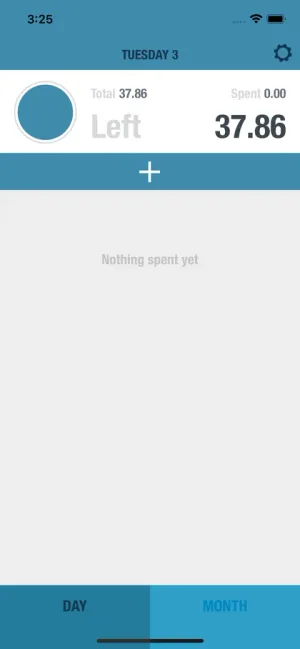
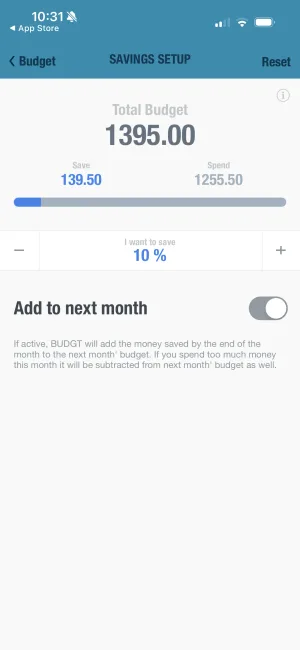
Loud budgeting is easier when you know your number. BUDGT shows your daily spending limit at a glance — so saying “that’s not in my budget” is always the confident truth.
Frequently Asked Questions
What is loud budgeting?
Loud budgeting is the practice of being open about your financial choices — simply saying 'that's not in my budget this month' instead of quietly overspending to keep up. It flips the old shame of admitting you're watching your money into something normal and even aspirational: you're prioritizing your goals out loud.
How do I start loud budgeting?
Start small and kind. Suggest cheaper alternatives ('I can't do the fancy dinner, but I'd love a coffee walk'), name your goal when it helps ('I'm saving for an emergency fund'), and keep it matter-of-fact. You don't owe anyone a detailed explanation — a friendly, confident 'that's not in the budget' is enough.
Isn't it awkward to talk about money?
It can feel that way at first, but loud budgeting usually reduces awkwardness rather than adding it. Most people are relieved when someone else says 'let's do something cheaper' — you're often giving the whole group permission. Honesty tends to land better than a vague excuse.
Does loud budgeting actually save money?
Yes, largely by removing social pressure — one of the biggest hidden drivers of overspending. When declining an expensive plan is normal instead of embarrassing, you stop buying things to fit in. It also builds accountability: saying your goals out loud makes you more likely to follow through.
What's the difference between loud budgeting and being cheap?
Being cheap is about avoiding spending on principle. Loud budgeting is about spending intentionally and being open about it — you're not refusing to spend, you're choosing where your money goes and saying so. It's confident and goal-driven, not stingy.
Related Articles



Ready to take control of your budget?
Download BUDGT and start tracking your daily spending today.